
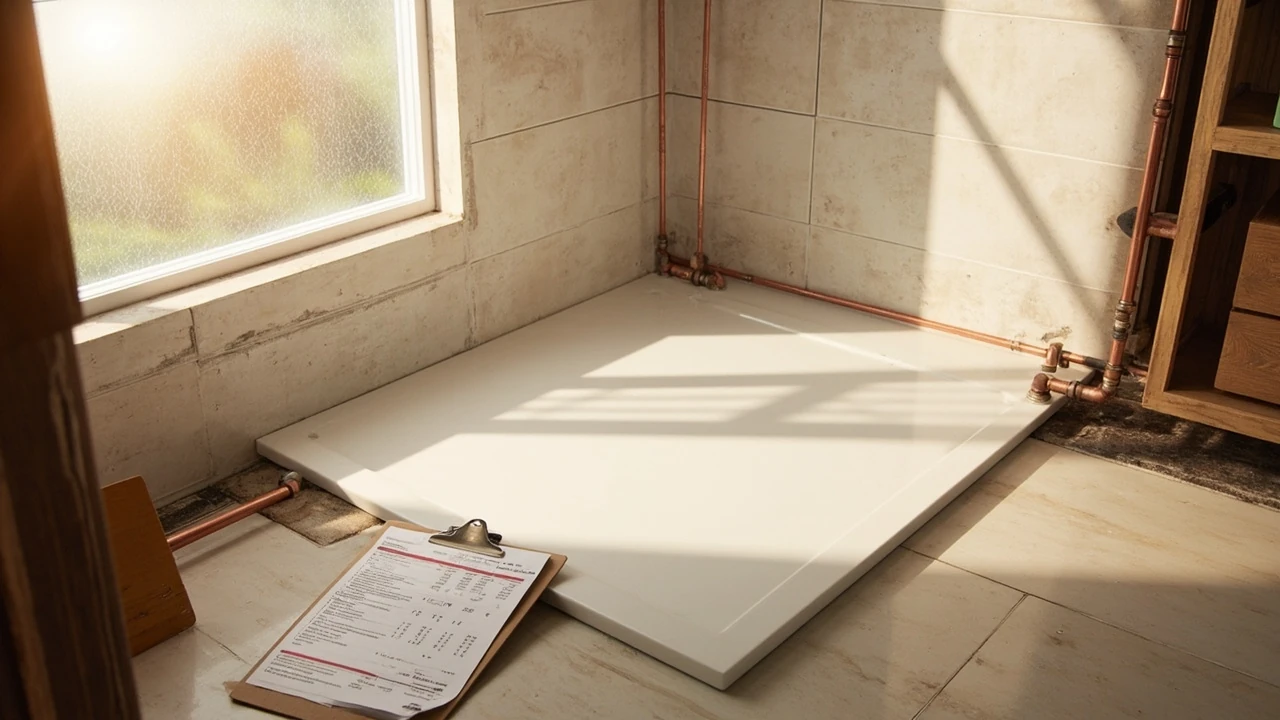
Shower installation cost: what homeowners actually pay in 2026
A new shower often looks like a single line item on a remodeling estimate, but the invoice usually arrives as a stack of separate charges. Labor, waterproofing, plumbing rough-in, demolition, and the shower enclosure itself each carry their own price, and each one can move the final number by hundreds of dollars. Understanding how those pieces fit together is the difference between budgeting $1,500 and being surprised by a $6,000 bill.
Homeowners searching for a clear shower installation cost figure rarely get one, because shower projects vary widely in scope. A swap of a fiberglass alcove unit in a tight first-floor bathroom is a very different job from converting a garden tub into a curbless walk-in with linear drain and custom tile. Both fall under the same label, but the cost ranges barely overlap. This guide walks through the realistic price bands, the line items that drive them, and the decisions that change the final number more than the choice of showerhead ever will.
What a typical shower installation cost looks like
Shower pricing in the U.S. tends to cluster into three broad tiers, based on the type of enclosure and the amount of plumbing and tile work involved. The ranges below reflect installed costs from publicly available cost-estimating resources and should be treated as planning figures, not quotes.
| Shower type | Typical installed range | What is included |
|---|---|---|
| Prefab fiberglass or acrylic alcove | $1,400 – $3,000 | Three-wall unit, basic mixing valve, standard door, minimal tile |
| Tile shower with acrylic or fiberglass base | $2,500 – $5,500 | Tile walls, pre-formed base, mid-range valve and trim, framed glass door |
| Custom tile shower with curb, bench, and niche | $4,500 – $10,000+ | Full tile build, waterproofing membrane, custom niches, semi-frameless glass |
| Curbless walk-in with linear drain | $6,000 – $15,000+ | Recessed subfloor, linear drain, full waterproofing, large-format tile, frameless glass |
The For additional context, Homewyse cost to install a shower stall page lists a national average starting point of roughly $1,493 to $1,756 per stall for basic mid-range work as of late 2025 and into 2026. That figure covers straightforward stall replacement in readily serviceable conditions. It is a useful anchor for the simplest case, not a ceiling for anything beyond it.
Most homeowners who plan a meaningful shower upgrade should expect to land somewhere between $3,000 and $8,000 once the project is finished, with outliers on either end depending on layout, materials, and how much existing plumbing needs to be moved.
The main drivers behind the final number
A shower estimate is really a bundle of smaller decisions, and a few of them tend to swing the bill more than the rest. Looking at each driver separately makes it easier to see where the money is going and where a homeowner has room to adjust.
Type of shower enclosure
The enclosure is the single biggest variable. A one-piece fiberglass unit can be carried through a standard doorway and set in place over an existing drain, which keeps labor low. A custom tile shower, by contrast, requires framing, cement board, waterproofing, tile setting, grouting, and sealing, plus the time of a tile setter who may charge $40 to $100 per hour or more depending on the market.
For homeowners who want the look of tile without the full custom build, a tile-ready shower base with prefabricated niches offers a middle path. It captures much of the visual result of a custom job while reducing labor time.
Plumbing rough-in and valve work
If the new shower lands on existing supply and drain lines, the plumbing portion of the job stays modest. Replacing a mixing valve and trim can add $300 to $900 in parts and labor. Moving the drain, relocating the valve, or upgrading to a thermostatic or pressure-balanced valve with multiple outlets can push the plumbing line well past $2,000.
Older homes with galvanized or aging copper supply lines often trigger additional replacement once walls are opened, and that work is not always visible in the original quote.
Demolition and disposal
Tearing out an old tile shower is slow, dusty, and produces heavy debris. Demolition and haul-away commonly adds $300 to $900 to a project, and more if the old installation includes a mortar bed or a cast iron drain. In multi-story homes or tight urban bathrooms, debris handling can climb further because of access constraints.
Waterproofing and substrate
Proper waterproofing is not optional. A PVC or rubber membrane, seam tape, and pre-formed corners add $200 to $600 in materials, and the labor to install them correctly is built into the tile work. Cutting corners here is the most expensive mistake a homeowner can make, because a failed waterproofing layer leads to rot, mold, and often a full rebuild of the same shower within a few years.
Glass door or enclosure
Glass is one of the line items that surprises first-time renovators. A framed sliding door can be installed for $400 to $900, while a semi-frameless or frameless enclosure with tempered glass typically runs $900 to $2,500 measured and installed. Heavy glass and custom angles push costs higher, and steam enclosures add yet another step.
Fixtures and accessories
The showerhead and trim are a small slice of the overall shower installation cost, but upgrades add up quickly. A basic pressure-balanced valve with a single showerhead might total $200 in parts, while a thermostatic system with a rain head, hand shower, and body sprays can reach $1,500 to $3,000 before installation. Grab bars, benches, niches, and lighting are usually quoted as add-ons rather than bundled into the base price.
How labor is usually priced
Shower installation is most often quoted as a flat project price rather than an hourly rate, because the scope is well defined once the layout is settled. That said, the people doing the work are usually billed at roughly the following rates in many U.S. markets:
- General remodel laborer or carpenter: $40 – $70 per hour
- Licensed plumber: $75 – $150 per hour
- Tile setter: $45 – $100 per hour
- Glass installer: $60 – $120 per hour, often per-project
A basic alcove replacement can be completed by a plumber and a helper in one to two days, which is why simple projects land on the lower end of the range. A full custom tile shower typically involves a plumber for one day, a tile crew for three to five working days, and a glass installer for a final half-day visit after tile and grout have cured.
Hidden costs that often show up after demo
For additional context, Most unpleasant surprises in shower projects come from what is behind the walls, not from the new fixture itself. A careful estimator will flag the items below as possibilities, but a written quote rarely guarantees that none of them will appear.
- Rotted subfloor or wall framing around the existing drain
- Outdated or corroded supply valves that no longer meet code
- Missing or improper vapor barrier behind existing tile
- Old drum-trap or non-code drain that must be replaced during demo
- Mold growth in the wall cavity, which usually requires remediation
- Electrical updates for new lighting, exhaust fan, or heated floors
Setting aside a 10 to 20 percent contingency above the highest written quote is a reasonable rule of thumb. That buffer covers most of what can appear once tile and drywall come out, without forcing a homeowner into a corner mid-project.
Cost comparison: replacing a shower vs. converting a tub
Tub-to-shower conversions are common, especially in homes with one full bathroom and a seldom-used tub. The pricing logic is different from a simple replacement because the project usually involves additional plumbing, drain relocation, and sometimes structural changes to the surrounding walls.
| Project type | Typical cost range | Main cost drivers |
|---|---|---|
| Shower-for-shower replacement in same footprint | $1,400 – $4,500 | Shower type, valve, glass |
| Tub-to-shower conversion on existing drain | $3,000 – $7,000 | Plumbing, wall finishing, glass, sometimes new subfloor |
| Tub-to-shower conversion with drain relocation | $5,000 – $10,000+ | Plumbing reroute, possible joist modification, tile scope |
A tub-to-shower conversion can also trigger permit requirements where none existed for the original tub, especially if the drain is moved or new electrical is added for a vent fan. Permit fees are small in the context of a full project, but inspection timing can affect the schedule.
DIY vs. hiring a pro
Some homeowners consider handling parts of a shower project themselves, particularly demolition, painting, or accessory installation. A few of these tasks are reasonable for an experienced DIYer. Others carry real risk if done without licensing or without the right waterproofing knowledge.
- Reasonable for many DIYers: removing the old fixtures, painting the surrounding walls after the new shower is installed, installing accessories like towel bars and shelves.
- Possible for skilled DIYers with help: installing a prefab acrylic or fiberglass unit, provided plumbing connections are reviewed by a licensed plumber.
- Strongly recommended to leave to a pro: full custom tile waterproofing and tile setting, drain relocation, glass enclosure measurement and install, and any work that requires a permit.
The risk in DIY shower work is not the visible finish. It is the layers underneath. A small failure in the waterproofing membrane or drain connection can go unnoticed for months and lead to thousands of dollars in subfloor and framing repair.
How to read a shower estimate without getting burned
A useful shower estimate is detailed, lists materials by type and quantity, and shows labor as a separate line rather than a single round number. When comparing two quotes, the cheaper one often is not actually cheaper once the missing items are added back in.
A few checks that catch most problems before signing:
- Confirm the shower base, walls, and pan are listed by brand, model, and size.
- Look for a separate waterproofing line, not a single combined “tile labor” figure.
- Make sure the plumbing scope names the valve type and lists any needed supply line replacement.
- Check whether the glass enclosure is measured and installed by the glass company, or whether the general contractor is taking responsibility for fit.
- Ask what is excluded, especially permit fees, haul-away, subfloor repair, and mold remediation.
For homeowners juggling multiple estimates, an internal resource like a guide to what bathroom cleaning services really cost can help frame how labor is priced in bathroom work, even though it focuses on ongoing service rather than installation.
Ways to keep the project on budget
Shower installation cost is driven by decisions, not just labor rates. The most effective way to control the final number is to lock in scope early and avoid mid-project changes that require reordering materials or rebooking trades.
- Choose a shower base and wall system that fits existing plumbing whenever possible to skip drain relocation.
- Pick a standard glass size rather than a custom panel to keep glass pricing in check.
- Stay with mid-range tile in larger formats, which reduces install time and grout lines.
- Bundle plumbing and tile work with one contractor so labor overlaps instead of stacking on separate day rates.
- Order fixtures and tile before demo, so the project is not waiting on backordered items.
Where budget pressure is real, the best savings usually come from simplifying the waterproofed footprint and reusing the existing drain location, rather than cutting the valve or glass quality.
Permits, codes, and inspection timing
Most municipalities require a plumbing permit for any work that involves altering supply or drain lines, and many require a building permit for tile shower builds that include waterproofing membranes. Electrical changes for new lighting or a vent fan usually require a separate electrical permit. Permit fees are modest compared to the rest of the project, but they affect scheduling because the rough-in and final inspections must be passed before walls are closed up.
A licensed plumber who pulls the permit generally handles the inspection scheduling as part of the job. If the shower is being installed by a general contractor without a licensed plumber on the team, it is worth confirming who is responsible for permits before the work begins.
How long the project actually takes
Timelines matter because living without a working shower for a few extra days is a real cost to a household. A simple alcove replacement can be completed in two to four working days, while a full custom tile shower typically runs two to three weeks from first demolition to final glass installation. The longest single phase is usually cure time, because grout and certain waterproofing layers need to dry before glass and sealants can be applied.
For households with a single bathroom, planning the project around a short-term stay elsewhere, or coordinating with a remodel that covers a guest bath, avoids the stress of being mid-project with no working shower at all.
What changes the cost the most in practice
Across the projects most homeowners actually undertake, the ranking below tends to hold. The first two items move the final number more than everything else combined.
- Whether the shower is a prefab unit or a custom tile build
- Whether plumbing can stay on the existing rough-in or must be moved
- Glass enclosure style and glass thickness
- Tile material, format, and pattern complexity
- Condition of the subfloor and wall framing once the old shower is removed
- Valve and fixture tier
For readers thinking about a related home system upgrade, an internal walkthrough such as this attic fan installation guide shows how scope decisions in another part of the home follow a similar pattern: the type of equipment and the condition of what is already in place determine the final installed cost more than the brand name on the box.
Frequently asked questions
What is the average shower installation cost for a basic alcove unit?
For a straightforward alcove replacement using a prefab fiberglass or acrylic unit, a typical shower installation cost lands between $1,400 and $3,000, including the unit, valve, door, and basic labor. Older homes with corroded valves or damaged subfloors can push the project above that range even when the shower itself is simple.
Does a tub-to-shower conversion cost more than a shower replacement?
Yes, in most cases. A tub-to-shower conversion usually runs $3,000 to $7,000 when the drain stays in place, and $5,000 to $10,000 or more if the drain is moved. The extra cost comes from additional plumbing, wall finishing to fill the space the tub occupied, and often a larger glass enclosure than a standard alcove requires.
How long does a shower installation take from start to finish?
A simple alcove replacement can be completed in two to four working days. A full custom tile shower typically takes two to three weeks once demolition begins, with most of that time spent on tile setting, grouting, and cure windows before glass and sealants are applied.
Do I need a permit to replace a shower?
It depends on the scope. A like-for-like fixture swap on existing plumbing often does not require a permit, but any work that alters supply or drain lines usually does. Cities and counties vary, so confirming the local rule before work begins avoids inspection problems at the end of the project.
Can I install a shower myself to save money?
Some parts of a shower project, such as demolition or painting, are reasonable for a DIYer. The waterproofing layer, drain connection, and tile setting are best left to experienced trades, because small mistakes in these layers can lead to mold, leaks, and costly structural repairs later. A licensed plumber is also typically required for any work that involves supply or drain lines.
What is the most expensive part of a shower installation?
Tile and labor are usually the largest line items in a custom build, often exceeding the cost of the shower fixtures and glass combined. For prefab projects, the shower enclosure and glass door are the dominant cost. Plumbing can become the largest line if the drain or supply lines must be relocated.
How do I compare two shower installation quotes fairly?
Put both quotes on the same structure, with materials listed by model and size, labor broken out by trade, and exclusions written explicitly. The cheaper quote is often missing waterproofing, glass, plumbing parts, or haul-away, and the true comparison only shows once those gaps are filled in.
Is it worth spending more on a thermostatic shower valve?
For households with children, older adults, or anyone sensitive to temperature swings, a thermostatic valve offers a real safety and comfort benefit. The upgrade typically adds a few hundred dollars over a standard pressure-balanced valve, and many homeowners find the consistency worth the difference over the life of the shower.
What should I budget for unexpected repairs during a shower install?
A 10 to 20 percent contingency above the highest written estimate is a reasonable starting point. The most common surprise is subfloor rot around an old drain, followed by mold discovered behind a long-standing tile job. Setting the contingency aside before the project starts keeps the project moving when those issues appear.
How does the choice of glass door affect total cost?
Glass is one of the more variable line items. A framed sliding door can be installed for $400 to $900, while a frameless enclosure with thicker tempered glass commonly runs $900 to $2,500 measured and installed. Custom angles, steam-rated glass, or very large panels can push the figure higher.



Leave a Reply