
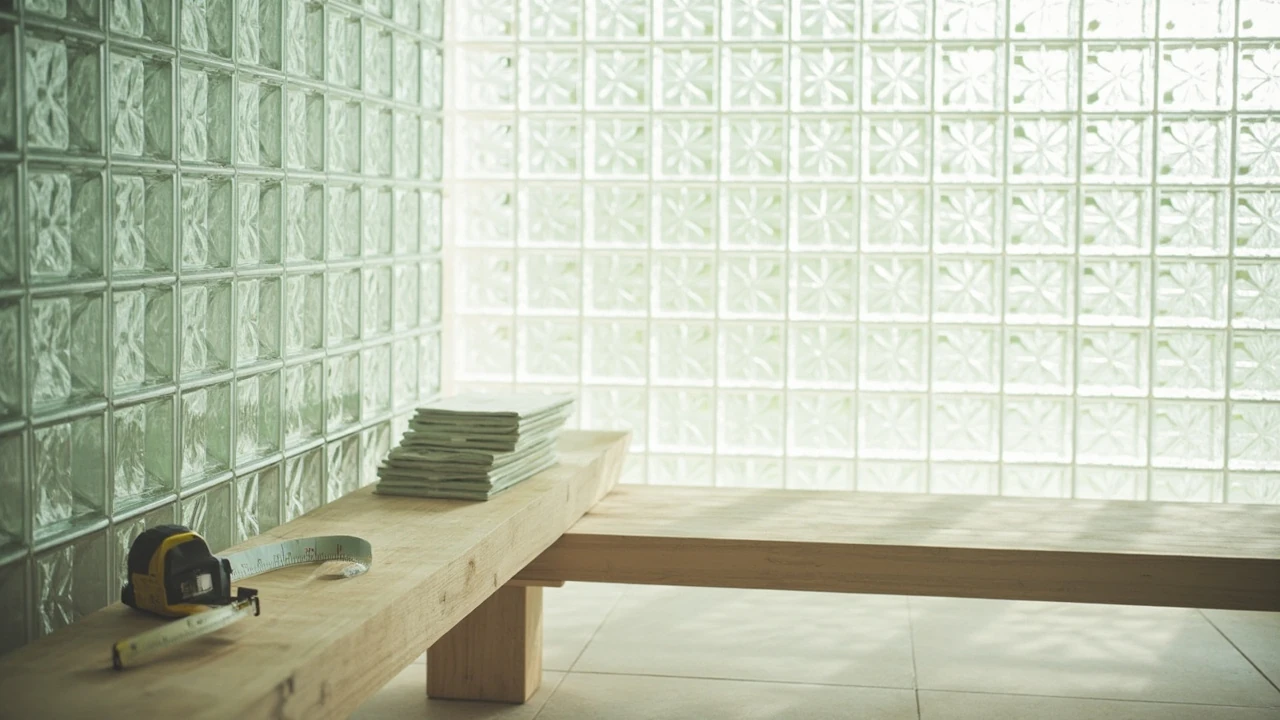
Harga glass block: what actually drives the price
Most homeowners ask about harga glass block after they have already fallen for a wall in a showroom photo. A neat grid of translucent squares looks affordable until the first supplier quote arrives and the number is several times what a plain drywall partition would cost. The good news is that glass block pricing is not mysterious. It follows a handful of physical and commercial rules: the size of the unit, the pattern, the quantity you buy, whether the block is solid or hollow, and how it gets to your site. Once you understand which lever you are pulling, you can compare quotes with confidence instead of guessing why one supplier is 30 percent more expensive than another.
This guide breaks down how harga glass block is built, the realistic price bands you can expect per piece and per square meter, the size and pattern choices that change the bill, and the small decisions during ordering that decide whether a project stays on budget. The pricing references below are framed as ranges and structural drivers, not as live quotes, because real figures change by region, currency, and supplier. Use them to plan a budget and to ask the right questions, then confirm current numbers with local distributors before you commit.
How glass block is priced in the real market
Glass block is sold in three different ways, and mixing them up is the single most common reason buyers feel confused by a quote. Some suppliers price by the individual block, some price by the square meter covered, and some price a finished wall as a system that includes the framing, mortar, and reinforcement. Each method is legitimate, but they are only comparable after you convert them into the same unit.
A typical residential block is roughly 19 by 19 centimeters, with two common thicknesses of about 8 centimeters for standard interior use and around 10 centimeters for exterior or security applications. One square meter of wall typically requires around 25 blocks in the standard format, so the math from per-piece pricing to per-square-meter pricing is simple. If a block is listed at a given price, multiplying that by 25 gives you a quick reference for the material cost of one square meter of wall, before mortar, grout, and any reinforcement accessories.
Wholesale pricing usually kicks in when an order covers a few square meters or more. Small quantities bought off the shelf at a hardware chain will carry a noticeable retail markup. Bulk orders through a dedicated glass block supplier will often drop the per-piece price by 15 to 30 percent, especially when patterns and sizes are kept standard rather than custom-mixed. That is one reason a contractor and a homeowner doing the same job can see very different numbers when each calls the same brand.
Typical price ranges for standard patterns
Price ranges vary widely by country, supplier, and currency, so the table below is a structural guide rather than a live quote. Use it to understand how patterns and sizes change the line item, then ask your local distributor for current figures in your currency.
| Pattern or format | Typical size (cm) | Relative price per piece | Where it is usually used |
|---|---|---|---|
| Clear wave, standard hollow | 19 x 19 x 8 | Baseline (1.0x) | Bathrooms, interior partitions, basement windows |
| Frosted or lightly textured | 19 x 19 x 8 | About 1.1 to 1.3x baseline | Bathrooms, showers, front entry sidelights |
| Solid glass block | 19 x 19 x 8 | About 1.5 to 2.0x baseline | Security walls, exterior facades, acoustic partitions |
| End or corner blocks | 19 x 19 x 8 | About 1.2 to 1.5x baseline | Wall terminations, framed openings, finished edges |
| Large format wave | 24 x 24 x 8 | About 1.4 to 1.8x baseline | Larger walls, feature partitions, modern interiors |
| Decorative colored or sculpted | 19 x 19 x 8 | About 1.6 to 2.5x baseline | Accent walls, bar fronts, statement panels |
If a quote looks unusually low, the most common reason is that it only covers the blocks themselves. If it looks unusually high, the most common reason is that it includes framing, mortar, reinforcement, and installation labor bundled together. Always ask for an itemized breakdown before you judge whether the number is fair.
What changes the price of a glass block wall
The block itself is usually 50 to 70 percent of a finished wall’s cost. The remainder comes from the wall system, which behaves a little like a kit: if you skip the kit parts, the wall either looks unfinished or fails structurally. Understanding each driver helps you decide where to save and where not to.
- Block format and pattern. Plain clear wave blocks in a standard 19 by 19 centimeter size are the cheapest option. Frosted or lightly textured patterns add a small premium because the surface treatment is a separate production step. Solid blocks, which are heavier and made of cast glass rather than two pressed halves, cost more because they use more raw material and are harder to manufacture without defects.
- Wall size and total quantity. Suppliers reduce the per-piece price once a quote crosses a few square meters, because handling and packaging costs are spread across more units. A 6 square meter wall will almost always have a lower material cost per square meter than a 1.5 square meter shower partition, even when the pattern is identical.
- Frame and edge components. Glass block walls are not free-standing masonry. They need perimeter channels at the floor, ceiling, and adjacent walls, plus expansion material so the wall can flex slightly with the building. These channels and accessories are a meaningful share of the materials bill and should always be in the quote.
- Reinforcement. Steel reinforcement rods are placed inside the horizontal mortar joints every couple of courses and at the panel edges. For larger walls, the rod specification and spacing are set by the manufacturer’s published system, and skipping or thinning them out is one of the most common causes of cracked joints later.
- Mortar, grout, and surface finish. White or colored mortar affects the look of the wall, and specialty grouts cost more than standard gray. If the wall is in a wet area, waterproofing additives or a sealer are also a small but real line item.
- Labor and access. Glass blocks are heavy and need consistent, level installation. Walls on the ground floor go in faster than upper-floor or high-ceiling installations, which require more staging and slower placement. Tight access for materials can also push labor up.
- Shipping and packaging. Glass blocks are heavy and fragile, so freight is a real cost driver on long-distance orders. Some suppliers include free shipping above a certain order value, while others quote freight as a separate line.
Glass block sizes and what they mean for your budget
Most first-time buyers only know the standard 19 by 19 centimeter square, but several other sizes are common. The size choice changes both the look of the wall and the labor involved, because each block has to be set level and aligned with the rest of the grid.
| Nominal size | Approximate coverage per block | Effect on price per square meter | Practical notes |
|---|---|---|---|
| 19 x 19 x 8 cm (standard) | About 0.036 m² | Baseline | Widest range of patterns, easiest to source, simplest installation |
| 19 x 19 x 10 cm (thick) | About 0.036 m² | Slightly higher per piece | Used where extra thickness helps acoustics or security |
| 24 x 24 x 8 cm (large) | About 0.058 m² | Often lower per square meter | Covers area faster, fewer joints, but heavier per block |
| 11 x 11 x 8 cm (small) | About 0.012 m² | Higher per square meter | Used for detail bands, curves, or feature strips, not full walls |
| Rectangular formats (e.g. 19 x 9, 24 x 11) | About 0.017 to 0.026 m² | Varies by pattern | Used to break up large walls with horizontal bands or borders |
Larger blocks can lower the cost per square meter, but they also weigh more per piece, so a single installer cannot carry as many at a time and the wall takes longer to lay. On a small partition, the labor savings are usually smaller than the per-piece material savings, so the final wall cost is similar across sizes. On a large feature wall, larger blocks become genuinely cheaper to install because the installer sets fewer units overall.
Where glass block is most often used at home
The pattern of where glass block is installed has a big effect on how to think about budget, because some applications demand thicker or specialty blocks while others can use the cheapest pattern available.
- Bathroom windows and shower walls. A small bathroom window or a shower partition is the most common residential project. The wall area is small, the pattern is usually clear wave or frosted, and the cost is driven by framing and waterproofing details more than by the block itself.
- Basement windows. Glass block basement windows are popular because they admit light without creating an easy entry point. The blocks are usually standard hollow pattern, and the openings are small enough that a modest quantity covers the job.
- Interior feature walls. A floor-to-ceiling glass block wall between a living room and a stairwell is a statement piece. The cost scales with the wall area, so budget decisions are mostly about pattern and size rather than scope.
- Front entry sidelights and transoms. Narrow vertical bands next to a front door are a traditional use. They are usually framed in a pre-made window unit, so the quote is often a packaged price rather than a per-piece price.
- Garage-to-house interior windows. Where a house has a converted garage or a workshop, glass block windows are sometimes used to bring light in while keeping privacy. These are usually small openings and follow the same logic as basement windows.
For a realistic ballpark, a small bathroom partition covering roughly 1.5 square meters will typically use about 35 to 40 standard blocks. A basement window opening around 60 by 40 centimeters may use only 6 to 8 blocks, and a full feature wall of 6 square meters can run 150 blocks or more. Multiplying those quantities by your local per-piece price gives you a working material budget.
How to read a glass block quote
Quotes for glass block work are often presented in a single line, which makes them hard to compare. The clearest approach is to ask the supplier or contractor for a small table that separates materials, accessories, and labor. Once you have that, the numbers tell their own story.
- Blocks. The pattern, size, and quantity of each block type. A quote that says only “glass blocks” without naming the pattern and size is a flag to ask for clarification.
- Frame and perimeter channels. These are the metal or plastic tracks that hold the wall in place at the floor, ceiling, and side walls. They are usually sold by the running meter and should be itemized.
- Reinforcement. Steel rods and joint reinforcement materials, ideally named by size and spacing.
- Mortar, grout, and sealers. The amount and type, including any color or waterproofing additives.
- Labor. Usually quoted as a fixed price for the job or per square meter of finished wall. Make sure it is clear whether old wall removal, surface preparation, and final cleanup are included.
- Shipping or delivery. A separate line is normal. If it is missing, ask whether it has been included or simply omitted.
When a quote is itemized this way, it is much easier to negotiate. A homeowner who only wants to save money can keep the labor and the frame quality, then choose a slightly cheaper pattern. A homeowner who wants a better look can keep the pattern and reduce the wall area or swap to a larger block format to cut labor hours.
Common mistakes that quietly raise the price
Most glass block projects go smoothly, but a few recurring mistakes inflate the bill or create problems later. They are easy to avoid with a little planning.
- Mixing too many patterns. Each different pattern is a separate order line, and many suppliers charge a small setup fee per pattern. Picking one or two patterns keeps the order efficient and the look coherent.
- Forgetting the expansion joints. Glass block walls move slightly with temperature and building flex. Without a proper expansion joint at the head and sides, the wall can crack at the corners within a season. The expansion material is cheap, but the labor to rework a cracked wall is not.
- Underestimating the framing. A glass block wall is not a stack of blocks. It needs solid support at the head, whether that is a structural beam, a poured lintel, or a steel channel. Skipping this step is unsafe and is also the kind of error a building inspector will not overlook.
- Choosing the wrong block for the location. Hollow blocks are fine for interior partitions, but exterior or security walls usually need thicker or solid blocks. Using the cheapest block in a place that needs a more robust one leads to early replacement.
- Ignoring tile or floor finish alignment. A glass block wall that does not align with the floor tile grid or ceiling height looks awkward and forces cuts. Planning the layout on paper before ordering avoids waste.
How to keep the project on budget
Glass block is a mid-range material, not a budget one, but a few habits make it friendlier to a fixed budget. None of these compromise the look or the durability of the finished wall.
- Order in one batch. A single delivery avoids second-hand shipping costs and reduces the risk of shade or pattern variation between batches.
- Use standard sizes and patterns. Custom sizes and special colors are real products, but they are also the most expensive options. Sticking to standard patterns keeps the order efficient.
- Plan the layout in full blocks. Designing the wall so that the height and width land on full block dimensions avoids the time and cost of cutting blocks, which is slow and wasteful.
- Get two or three comparable quotes. At least one quote from a dedicated glass block supplier and one from a general contractor. The structure of the two quotes usually tells you where the savings are.
- Ask about leftover stock. Some suppliers discount small lots of discontinued patterns. If the pattern only needs to be acceptable, not unique, leftover stock can be a real saving.
For a useful comparison, browsing the catalog of a dedicated glass block supplier gives a sense of how patterns, sizes, and accessories are organized as a system, and helps frame the right questions when talking to a local distributor.
How harga glass block compares to other wall materials
It is often useful to compare glass block to the materials it replaces, both in terms of upfront cost and the trade-offs that come with each option. The table below frames glass block against a few common alternatives for a 4 square meter interior partition, including typical residential-grade material ranges. Numbers are structural guides, not live quotes.
| Material | Approximate material cost per m² | Labor intensity | Light transmission | Privacy at default thickness |
|---|---|---|---|---|
| Standard glass block (clear wave, hollow) | Mid to upper mid | Moderate, needs consistent level work | High, diffused | High |
| Solid glass block | Upper mid to high | Moderate to high, heavier units | Medium, more tinted | Very high |
| Drywall on metal stud, painted | Low to mid | Low to moderate | None | Total |
| Frameless interior glass partition | Mid to high | Low to moderate | High, clear | Low to medium (with frosted film) |
| Brick or concrete block, plastered | Low to mid | High | None | Total |
For projects where the point of the wall is to bring in light while keeping privacy, glass block is usually the most cost-effective way to do both at once. A frameless glass partition does it with a thinner profile, but it gives up the security and acoustic benefits of a thick masonry-style wall. Plain drywall is cheaper, but it needs separate windows, light wells, or skylights to match the daylighting effect, which quickly eats into the savings.
Buying channels and what each one offers
Where you buy matters as much as what you buy, because each channel is structured for a different kind of customer.
- Specialist glass block suppliers. The widest range of patterns and sizes, with staff who know the system parts. Best for unusual patterns, larger orders, and projects that need technical advice on reinforcement and framing.
- Building material retailers. Carry the most common patterns in standard sizes, often in smaller quantities. Convenient for a small bathroom or basement window, but with a per-piece premium.
- Direct from manufacturers or importers. Possible for large orders, especially on commercial projects. Requires a fixed specification and a longer lead time.
- Contractor supply yards. Often restricted to trade accounts, but offer competitive prices for standard patterns when a contractor is placing the order.
Frequently asked questions
What is the cheapest glass block pattern?
Standard clear wave in the 19 by 19 by 8 centimeter size is usually the least expensive pattern. It is also the most widely available, which keeps the per-piece price competitive across suppliers.
Does the price change with color or texture?
Yes. Frosted and lightly textured patterns add a small premium because of the surface treatment. Strongly colored, sculpted, or specialty patterns can be two to two and a half times the price of a standard clear wave block.
How many blocks do I need per square meter?
For the standard 19 by 19 centimeter format, plan on roughly 25 blocks per square meter of finished wall. Larger formats need fewer, and smaller formats need more.
Is glass block more expensive than a regular window?
For the same opening, a glass block panel is usually more expensive than a standard insulated window. The trade-off is privacy, security, and the ability to form walls and partitions, which a flat window cannot do.
Can I install glass block myself?
Small panels like a basement window are realistic for a careful DIY builder with masonry experience. Larger walls benefit from a professional installer, because consistent level joints and correct reinforcement are easier to maintain on a full wall than on a single opening.
How long does a glass block wall last?
A properly built glass block wall using the manufacturer’s system parts can last for decades. The blocks themselves do not degrade, and the main failure points are mortar joints and perimeter expansion material, both of which can be repaired without rebuilding the wall.
Do glass block walls need maintenance?
Routine cleaning with non-abrasive glass cleaner is usually enough. Periodic inspection of the perimeter sealant, especially in wet areas, helps catch any joint movement before it becomes a problem.
Are glass blocks energy efficient?
Hollow glass blocks have reasonable thermal performance for a masonry-style product and outperform single-pane glass, though they are not as efficient as a modern insulated window. Thicker or solid blocks can be used where acoustic or security performance is more important than thermal performance.
Can glass block be used outdoors?
Yes, with the right block thickness and a proper perimeter frame. Exterior applications usually specify thicker blocks, corrosion-resistant reinforcement, and a movement joint that allows the wall to expand and contract with temperature changes.
Why is my quote so much higher than an online price list?
Online price lists usually show the cost of the block only. A finished wall also needs perimeter channels, reinforcement, mortar, and labor, all of which are itemized in a proper quote. Comparing the two without separating materials from system parts is the most common reason for surprise.



Leave a Reply