
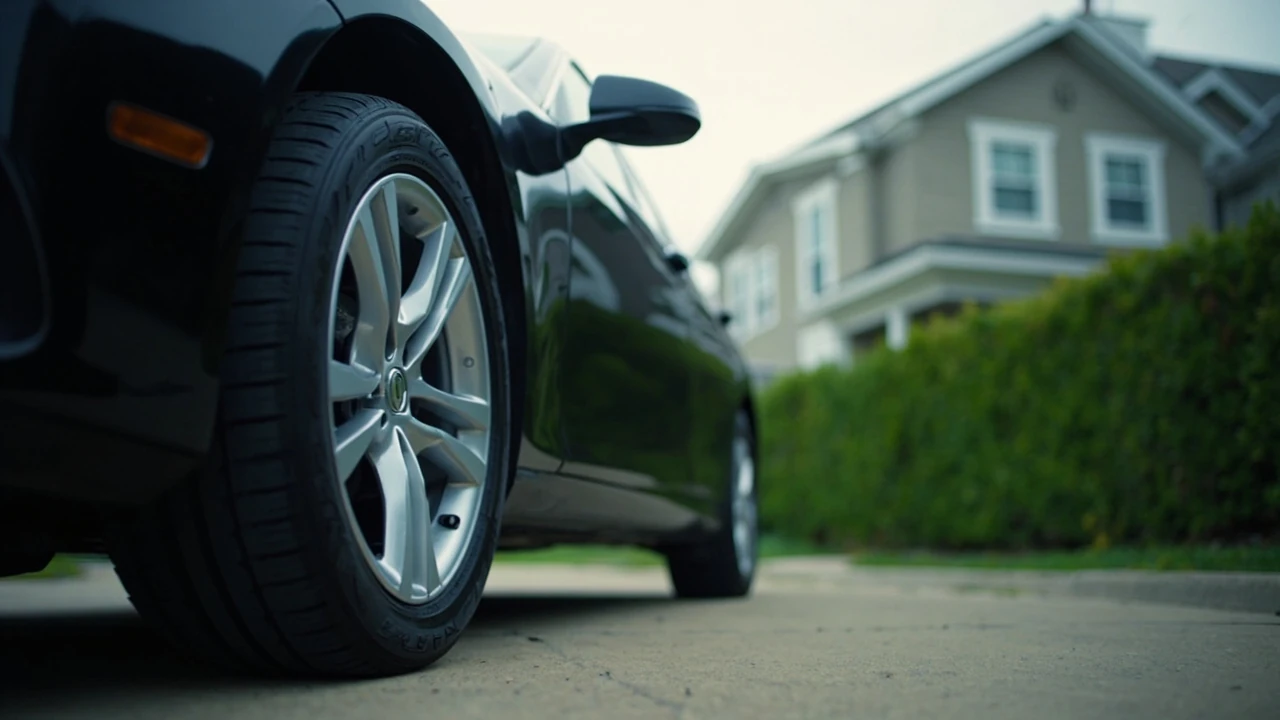
Bridgestone DriveGuard Plus: a run-flat touring tire explained
A slow leak discovered on a Monday morning commute is the kind of problem that turns a routine day into a tow-truck situation. The Bridgestone DriveGuard Plus is built around the idea of removing that middle step. It is an all-season touring tire with a self-supporting sidewall, marketed to drivers who want a quieter, more comfortable tire for daily use but also want the option to keep driving briefly after a puncture, instead of pulling over on a busy highway shoulder and waiting for roadside service.
For shoppers comparing options, the harder questions are about real-world behavior, not marketing copy. How far can you actually drive after a loss of pressure, what does the tire give up to offer that safety margin, and is the price premium worth it for a car that rarely sees a highway? This guide walks through what the DriveGuard Plus is, where it fits, and what to weigh before buying a set for your own vehicle.
What the DriveGuard Plus actually is
The DriveGuard Plus sits in the all-season touring category, which is aimed at drivers who want year-round traction, reasonable comfort, and a long service life rather than maximum dry-cornering grip or dedicated winter performance. The defining feature, though, is the run-flat construction: reinforced sidewalls that can support the vehicle’s weight for a limited distance at a limited speed when the tire has lost all air pressure.
Bridgestone offers the tire in a wide range of sizes that cover most modern passenger vehicles. According to retailer fitment data, the wheel size range runs from 16-inch to 19-inch, which makes the tire a candidate for compact cars, mid-size sedans, performance sedans, coupes, minivans, and crossovers. That breadth of fitment is one reason the DriveGuard Plus is often recommended as a direct replacement for a vehicle’s original run-flat tire, rather than a step up in performance.
It is important to distinguish run-flat technology from a spare tire. A spare, whether full-size or temporary, physically replaces the flat and lets the driver continue normally. A run-flat tire continues to function as the only contact patch with the road after pressure loss, which is a much more demanding job for the sidewall structure.
How a run-flat sidewall works in practice
Self-supporting run-flat tires use a thicker, heat-resistant rubber insert in the sidewall, combined with a reinforced bead area that keeps the tire seated on the wheel even without air pressure. The internal structure is engineered to deform in a controlled way so that the tread still meets the road relatively evenly when the tire is flat, rather than collapsing into the rim.
For the driver, the practical effect of this design is a controlled, low-speed continuation rather than a normal drive. Bridgestone’s typical guidance for the DriveGuard family is that after a complete loss of pressure, the driver can travel up to 50 miles at speeds up to 50 mph, which is enough to reach a service station, dealership, or home in most urban and suburban settings. That window is a guideline based on the tire’s design, not a guaranteed figure for every situation, and actual distance depends on vehicle weight, ambient temperature, and how heavily the tire is loaded.
The trade-off is weight. The reinforced sidewall adds mass compared with a standard tire of the same size, and that extra unsprung weight tends to show up as slightly firmer ride quality and a small reduction in steering sharpness. Touring tires are tuned for comfort, so most drivers do not notice the difference day to day, but anyone moving from a lightweight summer performance tire to the DriveGuard Plus will feel the change.
Where the DriveGuard Plus fits in Bridgestone’s lineup
Bridgestone produces a large number of tire lines, and it helps to understand where the DriveGuard Plus sits in that hierarchy. The table below compares it with three other common Bridgestone touring and grand-touring options a shopper is likely to see in the same search results.
| Model | Primary category | Run-flat capable | Typical use case |
|---|---|---|---|
| Bridgestone DriveGuard Plus | All-season touring | Yes, self-supporting | Daily driving on sedans, coupes, minivans, and crossovers with a factory run-flat fitment or a desire for short-term mobility after a puncture |
| Bridgestone Turanza QuietTrack | Grand touring all-season | Select sizes only | Comfort-focused drivers who want low noise and a smooth ride |
| Bridgestone Potenza RE980AS | Ultra-high-performance all-season | No | Sporty sedans and coupes that need stronger dry and wet grip |
| Bridgestone Blizzak WS90 | Winter | No | Cold-climate drivers who need dedicated ice and snow traction |
The clearest point in that comparison is that the DriveGuard Plus is not Bridgestone’s quietest tire, its sportiest tire, or its best winter tire. It is a balance of those qualities with a feature most of the lineup does not offer. If a buyer does not need run-flat protection, a quieter grand-touring tire or a grippier ultra-high-performance all-season will often be a better fit.
What kind of driver actually benefits from this tire
Run-flat technology is most useful in a few specific situations, and a quick mental checklist is often more helpful than any single review.
- The vehicle was delivered with run-flat tires from the factory. Many BMW, Mercedes-Benz, MINI, and some Lexus models leave the assembly line without a spare, relying on run-flat technology instead. Replacing those tires with non-run-flat equivalents leaves the car without any spare and can change how the tire-pressure monitoring system behaves.
- The driver often travels on highways with narrow shoulders. In dense urban traffic, the ability to limp home at city speeds without stopping on a busy merge lane is a meaningful safety improvement.
- The vehicle has no spare tire well and the owner does not want to carry a full-size spare in the trunk. Some crossovers and performance sedans ship with a tire inflator kit, which is adequate for small punctures but cannot reseal a sidewall gash. A run-flat tire extends the usefulness of that kit.
- The driver prefers preventive safety features over a soft ride. Run-flat tires add weight and stiffness, so a comfort-first buyer may want to consider a standard touring tire instead.
If none of those situations apply, the run-flat feature adds cost and ride firmness without delivering the benefit it was designed for. A standard all-season touring tire in the same size will usually be cheaper and more comfortable, and a separate roadside assistance plan or a compact spare can provide similar peace of mind.
Performance in dry, wet, and light winter conditions
The DriveGuard Plus is an all-season tire, not a winter tire, and the difference matters in regions with real snow. All-season touring compounds are designed to remain flexible across a wide temperature range and to evacuate water through circumferential and lateral grooves, but they stiffen significantly below about 40 to 45 degrees Fahrenheit, which reduces grip on ice and packed snow.
Where the DriveGuard Plus does perform well, according to retailer-side reviews that compare it with other touring options, is in everyday dry and wet conditions. Stopping distances on dry pavement are competitive with other grand-touring all-season tires in the same category, and the tread pattern is designed to resist hydroplaning on rain-soaked roads. The tire is also rated for light snow, which covers the occasional dusting and a few weeks of cold, wet weather, but it is not a substitute for a dedicated winter tire in places that see sustained ice or heavy snowfall.
The practical guidance is straightforward. Drivers in the Pacific Northwest, the mid-Atlantic, the lower Midwest, and most of the South can run the DriveGuard Plus year-round. Drivers in New England, the Upper Midwest, the Mountain West, and most of Canada should plan on a second set of winter tires if they regularly encounter snow, regardless of how the all-season tire is marketed.
Size, fitment, and vehicle compatibility
One of the more common mistakes when buying replacement tires is choosing a tire that is technically the right diameter but the wrong load index or speed rating. The DriveGuard Plus is available in many sizes, but a few details are worth confirming before ordering.
| Specification | Typical range for DriveGuard Plus | What to check on the vehicle |
|---|---|---|
| Wheel diameter | 16 to 19 inches | Match the factory wheel size exactly; do not step up or down without confirming clearance in the wheel well |
| Section width | Approximately 205 to 245 mm | Match the size listed on the door jamb placard, not the size on the existing tire if it has been changed |
| Aspect ratio | Approximately 40 to 65 series | Lower-profile tires transmit more road feel and reduce sidewall flex; confirm the spare or inflator kit still fits if applicable |
| Load index | Varies by size | Must meet or exceed the vehicle’s original specification, especially for minivans and crossovers |
| Speed rating | Typically H or V | Must meet or exceed the original specification; some performance sedans require a W or Y rating that the DriveGuard Plus may not offer in every size |
For vehicles that originally shipped with run-flat tires, the simplest approach is to replace them with the same size and specification listed in the owner’s manual. For vehicles that did not, switching to run-flat tires can change ride quality and handling balance, so it is worth a test drive on a friend’s car with a similar setup before committing to a full set.
Cost, tire life, and total ownership picture
Run-flat tires almost always cost more than comparable non-run-flat touring tires in the same size, and the DriveGuard Plus is no exception. The premium is usually in the range of 20 to 40 percent per tire, depending on the size and the retailer. A few practical considerations help put that premium in context.
- Expected tread life. Touring all-season tires in this category typically last 50,000 to 70,000 miles under normal use. The DriveGuard Plus uses a tread compound tuned for longevity, so it should fall in that range, but actual life depends on alignment, rotation schedule, driving style, and climate.
- No spare tire savings. Some drivers reason that a run-flat tire eliminates the need for a spare, which offsets the cost. In practice, most vehicles that came with run-flat tires from the factory also have inflator kits rather than a spare, so the savings were already taken at the original purchase.
- Repairability. When a run-flat tire has been driven on while flat, the sidewall often cannot be repaired safely and the tire must be replaced. That can offset the value of the run-flat feature if the driver has already experienced one or more loss-of-pressure events.
- Replacement timing. If the vehicle originally had run-flat tires, mixing run-flat and non-run-flat tires on the same car is not recommended, because the handling balance can change unpredictably. Replacing all four at once is the standard approach, which raises the per-service cost.
A reasonable way to think about value is to multiply the per-tire premium by four, then divide by the expected tread life. If the result is in the same range as the cost of a roadside assistance membership or a compact spare kit, the run-flat feature pays for itself. If it is significantly higher, the value is harder to justify unless the safety benefit during a highway puncture is personally important.
How the DriveGuard Plus compares with other run-flat options
Several tire makers offer run-flat all-season touring tires, and the DriveGuard Plus is one of the more widely available options. The main competing products a shopper is likely to encounter include the Michelin Primacy Tour A/S in select run-fitment sizes, the Continental ProContact TX in run-flat variants, and the Goodyear Eagle Sport A/S in some original-equipment run-flat sizes.
| Attribute | Bridgestone DriveGuard Plus | Michelin Primacy Tour A/S (run-flat sizes) | Continental ProContact TX (run-flat sizes) |
|---|---|---|---|
| All-season touring focus | Yes | Yes | Yes |
| Run-flat construction | Standard across the line | Select sizes | Select sizes |
| Light-snow rating | Yes | Yes | Yes |
| Wheel size range | 16 to 19 inches | Limited, varies by region | Limited, varies by region |
| Typical price tier | Mid to upper | Upper | Upper |
For buyers who already have a strong preference for a particular brand, the decision is largely made. For buyers who do not, the DriveGuard Plus is a reasonable middle-ground option: more widely available in run-flat sizes than some competitors, and often priced a step below the premium tier.
What to check before you buy
Before ordering a set, it is worth running through a short list of practical checks. The goal is to avoid an expensive mistake, not to second-guess the decision.
- Confirm the vehicle’s original specification. The door jamb placard, the owner’s manual, and the current tire’s sidewall all give a size. If they disagree, the placard and the manual take precedence.
- Decide whether the run-flat feature is actually needed. Drivers who rarely leave the city, who already have roadside assistance, and whose vehicles came with non-run-flat tires and a spare may not gain much from the premium.
- Check for tire-pressure monitoring system compatibility. Most modern vehicles will work without any change, but a few older systems expect a specific sensor type. Confirm that the wheels and sensors from the old tires will transfer to the new ones if the wheels are being reused.
- Plan for installation. Run-flat tires require a slightly different mounting procedure because of the reinforced sidewall, and not every tire shop has experience with them. Choosing a retailer that handles run-flat tires regularly avoids installation headaches.
- Keep records. Note the manufacturing date on the sidewall, the install date, and the expected rotation interval. That information matters if a tire is later subject to a mileage warranty claim.
One final practical note. After installation, run-flat tires can feel slightly firmer than the tires they replace for the first few hundred miles while the tread surface scuffs in. That is normal and does not indicate a problem.
Common questions and practical limitations
A few recurring questions come up when drivers evaluate this tire, and the honest answers are more useful than a sales pitch.
First, the DriveGuard Plus is a touring tire, not a performance tire. Drivers who enjoy spirited back-road driving will find a more responsive tire in Bridgestone’s Potenza line, at the cost of some ride comfort and the run-flat feature.
Second, the run-flat distance and speed limits are conservative on purpose. A driver who can pull over safely and change a tire, or who has roadside assistance on the way, should do that rather than testing the upper end of the published limits.
Third, the tire cannot make a vehicle invincible. A sidewall blowout at highway speed, a wheel that has been damaged, or a puncture that exceeds roughly a quarter inch in diameter is beyond what any run-flat tire is designed to handle. The feature is a margin of safety, not a guarantee.
Fourth, the tire’s weight and stiffness mean that fuel economy may dip very slightly compared with a non-run-flat touring tire in the same size. For most drivers, the difference is well under one mile per gallon and not noticeable, but it is part of the trade-off.
A practical bottom line for the right buyer
The Bridgestone DriveGuard Plus is a well-rounded run-flat all-season touring tire aimed squarely at drivers of sedans, coupes, minivans, and crossovers who want a balance of comfort, year-round traction, and a built-in safety margin after a puncture. For drivers whose vehicles came with run-flat tires from the factory, it is one of the more accessible replacement options and is worth shortlisting. For drivers who are choosing run-flat technology for the first time, the decision should rest on whether the safety margin, the spare-tire convenience, and the broader size coverage are worth the price premium and the slight trade-off in ride softness.
If the answer is yes, the DriveGuard Plus is a sensible place to start. If the answer is no, a standard all-season touring tire from Bridgestone or another major maker will be cheaper, quieter, and just as safe in normal driving, with a compact spare or a roadside assistance plan providing the same peace of mind the run-flat sidewall was meant to deliver.
Frequently asked questions
Is the Bridgestone DriveGuard Plus a true run-flat tire?
Yes. The DriveGuard Plus uses self-supporting sidewall technology designed to keep the vehicle drivable for a limited distance and speed after a complete loss of air pressure. It is intended as a temporary measure to reach a service location, not as a permanent replacement for a repair.
How far and how fast can you drive on a flat DriveGuard Plus?
Bridgestone’s published guidance for the DriveGuard family is generally up to 50 miles at up to 50 mph after a complete pressure loss, provided conditions are reasonable. Actual distance can vary with vehicle weight, ambient temperature, and how the tire is loaded, and the tire should be replaced or professionally inspected after any run-flat event.
Does the DriveGuard Plus work in snow?
The tire carries a light-snow rating, which covers occasional winter weather and brief cold snaps. It is not a dedicated winter tire, and drivers in regions with sustained snow or ice should plan on a separate set of winter tires for the coldest months.
Can the DriveGuard Plus replace a non-run-flat tire on any car?
Mechanically, the tire can be mounted on many vehicles that originally had non-run-flat tires, but doing so changes the handling balance, ride feel, and weight distribution. A driver who is not replacing an existing run-flat tire should test the experience on a similar setup before committing to a full set, and should check that the vehicle’s tire-pressure monitoring system works without modification.
How long do DriveGuard Plus tires usually last?
Under normal driving conditions, a typical all-season touring tire in this category lasts 50,000 to 70,000 miles. The DriveGuard Plus is designed for longevity, but actual tread life depends on rotation frequency, alignment, climate, and driving style.
Do I need a spare tire if I run DriveGuard Plus?
Many drivers who run the DriveGuard Plus choose not to carry a spare, which is the original design intent of run-flat technology. That said, carrying a compact spare or a plug-and-inflate kit as a backup adds an extra margin of safety for larger punctures or sidewall damage that the run-flat tire is not designed to handle.
What sizes does the DriveGuard Plus come in?
The line covers a broad range of passenger vehicle fitments, with wheel diameters from 16 to 19 inches and section widths that suit compact cars, mid-size sedans, performance sedans, coupes, minivans, and crossovers. The exact size list varies by region and year, so confirming the right size on the vehicle’s door jamb placard before ordering is essential.
Is the DriveGuard Plus worth the price premium over a standard touring tire?
For drivers whose vehicles shipped with run-flat tires, the premium is usually a wash because the alternative is either staying with the same technology or replacing all four with non-run-flat tires and adding a spare. For drivers adding run-flat technology for the first time, the answer depends on how much they value the post-puncture mobility feature relative to the extra cost and slight ride firmness.
Can a punctured DriveGuard Plus be repaired?
A tire that has been driven on while fully flat often cannot be repaired safely, because the sidewall can be damaged internally even when the outside looks fine. A tire that has picked up a small puncture while still inflated can sometimes be patched, but the standard advice is to have any damaged run-flat tire inspected by a professional before deciding on repair versus replacement.
How does the DriveGuard Plus compare with the original DriveGuard?
The Plus version is positioned as the newer touring option in the line, with updates to tread pattern, compound, and sidewall construction aimed at improved comfort, wet traction, and tread life. Drivers moving from the original DriveGuard to the Plus version in the same size should expect a quieter ride and a slightly more responsive feel, while retaining the same core run-flat capability.
For an additional outside perspective on owner experiences and current pricing across sizes, the SimpleTire summary of owner feedback on the model is a useful starting point. Background on how self-supporting run-flat tires fit into the broader category of pneumatic tires is available in the Wikipedia article on run-flat tire design and history, which provides useful background for this point.







Leave a Reply