
Cost to pump septic tank: what homeowners actually pay
A family of four in a 1,500-gallon concrete tank in the Southeast can expect to pay roughly $300 to $475 for a routine pump-out, while a homeowner with a small 750-gallon tank on a tight access road in the Northeast can see a bill closer to $500 to $700 once travel and difficult-access fees are added. The national average tends to land near $380, but the spread between the cheapest and the most expensive jobs in the same county is often wider than the spread between two different states. That wide range is the reason two neighbors can get very different quotes for what looks like the same job, and it is also the reason the cost to pump septic tank is worth understanding before the truck shows up in the driveway.
This guide walks through the real numbers, the factors that change them, the pumping schedule that keeps those numbers from creeping up, and the questions that separate a fair quote from an inflated one. It is written for homeowners, not for service contractors, so the focus is on what you can verify, what you can negotiate, and what you should expect to see on a complete invoice.
What septic tank pumping really involves
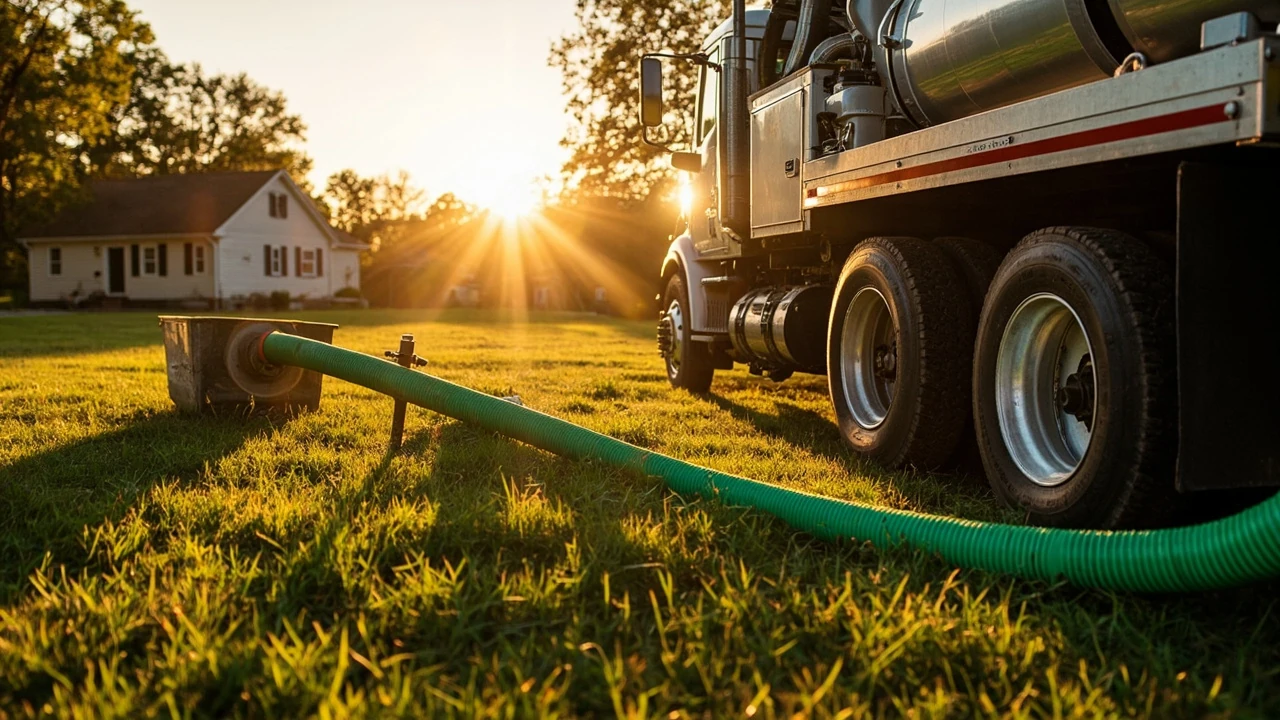
Pumping a septic tank is the physical removal of accumulated solids, known as septage, from an underground wastewater chamber. The tank itself stays in place. A vacuum truck connects to the tank through an access port or riser, pulls the contents out, and hauls the waste to a treatment facility. The job usually takes 30 to 60 minutes for a normal residential tank, although the total visit can run longer when the access lid is buried, the tank is oversized, or the leach field needs a quick check.
According to the description of a standard septic tank found in the Wikipedia reference article, the chamber relies on settling and anaerobic digestion to break down solids, but those processes are slow and incomplete. Solids keep accumulating faster than they decompose, which is exactly why periodic pumping is required. Skipping pump-outs does not save money in the long run. It usually leads to sludge migrating into the drain field, which is the most expensive component of a septic system to repair or replace.
Average cost to pump a septic tank by tank size
Tank size is the single biggest driver of the bill, because pumping companies charge partly by the gallon. The table below summarizes typical residential pricing as of 2026, drawn from common regional ranges. Use it as a starting point, not as a quote.
| Tank size (gallons) | Typical home | Low end | Mid range | High end |
|---|---|---|---|---|
| 500 to 750 | 1 to 2 bedroom cabin or cottage | $200 | $275 to $375 | $450 |
| 1,000 | Small 2 to 3 bedroom home | $250 | $325 to $425 | $525 |
| 1,250 to 1,500 | Typical 3 to 4 bedroom home | $300 | $375 to $475 | $600 |
| 2,000 to 2,500 | Larger home or multi-family setup | $400 | $500 to $650 | $850 |
| 2,500 plus or multi-chamber | Estate, multi-tank, or commercial | $600 | $750 to $1,000 | $1,400+ |
The same visit that costs $325 in a flat suburban lot can cost $500 or more if the truck has to back down a long gravel lane, snake a hose around a tight fence, or hand-dig to expose a buried lid. Those access issues are billed separately and are the most common source of sticker shock on the invoice.
What changes the cost to pump a septic tank
The base price is only one part of the bill. Several real-world variables push the total up or down, and understanding them is the easiest way to predict the final number before you call.
- Region and travel distance. Rural routes often include a trip fee of $25 to $100 because the nearest pump truck may be 20 to 40 miles away. Urban areas tend to have more competition, but they also have higher disposal fees at the treatment plant.
- Accessibility of the tank lid. A riser installed at ground level removes most of the labor. A buried lid under landscaping can add $75 to $200 in digging time, and a concrete lid that has to be broken open can add even more.
- How full the tank is. A tank pumped on a normal 3 to 5 year schedule usually comes out at roughly 30 to 50 percent solids. A tank that has been neglected for a decade can be near 100 percent solids, which doubles or triples the time on site and the gallons hauled.
- Time of year and urgency. Emergency or same-day service is typically 20 to 50 percent more than a scheduled visit. Frozen ground in winter can also slow the job and raise the price.
- Local disposal fees. Treatment plants charge the hauler per gallon to accept septage. Those fees vary widely by state and county and are passed through to the homeowner.
- Whether the tank is found at all. If the lid cannot be located and the crew has to probe the yard with a metal rod, expect an extra locating fee of $50 to $150.
- Repairs found during pumping. A cracked baffle, a damaged inlet tee, or a dead effluent filter is often discovered only when the tank is opened. Those repairs are quoted separately and can add $50 to several hundred dollars.
How often a septic tank should be pumped
Pumping frequency depends on tank size, household size, and water habits. The general rule of thumb is to pump a 1,000-gallon tank used by a family of four every 2 to 3 years, and a 1,500-gallon tank under the same load every 3 to 5 years. A solo occupant in a 1,000-gallon tank can sometimes stretch to 4 to 6 years without trouble.
The reference description of septic systems notes that some systems require pumping every few years while others can go 10 to 20 years between pumpings, depending on tank volume relative to solids input, ambient temperature, and local rules. That wide range is real, but it is also a warning: the systems that go a decade or more are usually small households, oversized tanks, or properties with very conservative water use. A family of five with a garbage disposal will never reach that upper end.
The honest answer is that pumping on a calendar is safer than pumping on a guess. Annual or biennial inspections of the sludge and scum layers cost far less than pumping a tank that has overflowed into the drain field, and a service technician can usually measure the layers in about ten minutes with a simple probe.
What a normal pumping visit looks like
Knowing the steps makes it much easier to tell whether the work matches the invoice. A standard residential visit follows a predictable sequence.
- The technician locates the access port or riser and removes the lid.
- The technician measures the scum layer at the top and the sludge layer at the bottom. A typical recommendation is to pump when the scum is within about 3 inches of the outlet baffle or when the sludge is within 12 inches of the bottom of the outlet.
- The vacuum hose is inserted, and the contents are pumped into the truck until the tank is essentially empty.
- The technician backwashes a small amount of clean water through the inlet and outlet tees to clear debris.
- The tank is refilled partially with clean water from the hose to help restart anaerobic activity and to reduce hydrostatic stress on the empty tank.
- The lid is replaced, the riser is checked, and the site is left clean.
A complete visit should leave the homeowner with a written report that includes tank size if known, the depth of scum and sludge before pumping, the gallons removed, the condition of the baffles, and any recommendations for follow-up.
Real cost scenarios for common households
The numbers below combine the typical pricing above with realistic access and regional conditions. They are not quotes, but they show how the same job can land at very different prices.
| Scenario | Tank size | Access | Region | Expected total |
|---|---|---|---|---|
| Suburban family of four, scheduled pump | 1,250 gal | Riser at grade, paved driveway | Midwest | $325 to $425 |
| Rural couple, buried lid, gravel drive | 1,000 gal | Buried concrete lid, 80 ft of hose | Appalachia | $500 to $700 |
| Vacation cabin, light use | 500 gal | Easy access, paved road | Upper Midwest | $200 to $275 |
| Large household, multi-tank | 2,000 gal + 1,000 gal | Two risers, flat lot | Pacific Northwest | $650 to $900 |
| Emergency backup, neglected tank | 1,500 gal | Buried lid, narrow side yard | Southeast | $700 to $1,000 |
The emergency row is the one most homeowners want to avoid. A tank that backs up into the house is usually the result of years of deferred maintenance, and the cleanup costs can add several hundred dollars to the plumbing and flooring bill on top of the pump-out.
How to get an accurate quote before the truck arrives
The fastest way to lower the cost to pump septic tank is to make the job easy for the crew. A few small steps before calling usually save more money than haggling over the hourly rate.
- Locate the tank and the lid ahead of time, even if it means renting a metal detector or probing the yard. Many companies will lower the price when the lid is already exposed.
- Install a riser if the lid is buried more than a few inches. A standard 24-inch riser costs about $100 to $200 installed and pays for itself within a couple of pump-outs.
- Clear a straight path from the truck to the tank. Trim bushes, move planters, and unlock gates so the hose can run without detours.
- Ask whether the quote includes the trip fee, the disposal fee, and any after-hours surcharge. A written quote that lists line items is much easier to compare.
- Ask for a copy of the pumper’s license or registration. In most states, septage haulers must be licensed, and a legitimate company will not hesitate to share the number.
Homeowners who do this work consistently report quotes that come in $50 to $150 lower than neighbors who simply call and ask for “the usual.”
Signs that a tank needs pumping sooner than the schedule
A few warning signs usually appear well before a full backup. Catching them early is the difference between a planned pump-out and an emergency call.
- Slow drains in multiple fixtures at the same time, especially when the washing machine is running.
- Gurgling sounds in the tub or shower shortly after a toilet flush.
- Wet spots or bright green grass over the drain field, particularly during dry weather.
- Sewage odors inside the house, near floor drains, or around the tank lid.
- Standing water in the yard directly above or downhill from the tank.
One slow drain is usually a clogged pipe. Multiple slow drains at once, combined with any of the other signs, usually means the tank is at or past capacity. The right move is to call a pumper within a few days rather than wait for a full backup, because the price of a planned visit is much lower than the price of an emergency.
Questions worth asking any septic pumping company
Not all pumpers offer the same level of service, and a few well-placed questions can reveal the difference before the work begins.
- What is included in the quoted price, and what would be billed as extra?
- Do you measure the scum and sludge layers, and will I get a written record?
- What is the total capacity of your truck, and will my tank be pumped in a single visit?
- Where is the waste hauled, and what is the disposal fee?
- Are you licensed and insured for septage hauling in this state or county?
- If you find a damaged baffle or filter, can you repair it on the same visit, and what would that cost?
- How soon after pumping is it safe to use water normally?
A company that answers these questions directly is much more likely to charge a fair price and to stand behind the work. A company that hedges or refuses to put anything in writing is usually the one whose invoice grows after the truck leaves.
Add-on services and what they actually cost
Pumping is the core service, but most companies offer related work that can be bundled in for a discount or added on the spot. Knowing the typical prices helps separate legitimate add-ons from padded invoices.
| Add-on service | Typical price | Notes |
|---|---|---|
| Effluent filter cleaning or replacement | $25 to $75 for cleaning, $50 to $150 for a new filter | Recommended annually on most systems |
| Baffle inspection or replacement | $50 to $200 for parts, plus labor | Common repair on older concrete tanks |
| Riser installation | $100 to $200 per riser | Long-term savings on future pump-outs |
| Tank locating with probe or metal detector | $50 to $150 | Often waived if the customer marks the lid |
| Drain field inspection | $75 to $200 | Useful if the system is over 15 years old |
| Hydrostatic or dye test | $150 to $400 | Used when a leak or backup is suspected |
None of these services are required at every visit, but each one has a real purpose. The key is to understand which one is being recommended and why before agreeing to it.
Ways to lower the cost to pump septic tank over time
Smart habits reduce the volume of solids that reach the tank, which lengthens the interval between pump-outs and lowers the lifetime cost of the system. None of these tips require special equipment.
- Spread laundry over the week instead of running multiple loads in a single day. Surge flow pushes solids into the drain field.
- Fix dripping faucets and running toilets. A running toilet can send hundreds of extra gallons into the tank every day.
- Avoid using the toilet as a trash can. Wipes, paper towels, feminine products, and dental floss do not break down and collect as solids.
- Keep grease out of the drains. Even with a garbage disposal, fats and oils solidify in the tank and add to the scum layer.
- Use septic-safe detergents in moderation. Excessive surfactant load can disrupt the bacterial balance in the tank.
- Direct roof gutters and surface water away from the drain field. Extra water overloads the soil and stresses the system.
Over a 20-year span, a household that follows these practices may spend $1,500 to $2,500 less on septic service than a household that treats the system like a city sewer.
When pumping is not enough
Sometimes the right call is repair or replacement rather than another pump-out. A tank that needs pumping every year, a drain field that stays wet for days after rain, or sewage surfacing in the yard are all signs that the system has failed beyond routine maintenance.
Typical replacement costs in 2026 range from $5,000 to $15,000 for a conventional drain field and $15,000 to $30,000 for an engineered or mound system, depending on soil conditions and local rules. Compared to those numbers, the cost to pump septic tank every few years is a small fraction of total ownership. Regular pumping is the cheapest insurance against the much larger bill that follows a failed system.
What to keep from this page
The cost to pump septic tank is mostly a function of tank size, accessibility, and how full the tank has become. A typical homeowner pays $300 to $475 for a routine visit, with rural and emergency jobs pushing higher. The cheapest way to keep that number low is to pump on a regular schedule, install a riser if the lid is buried, and keep solids out of the system in the first place. A good pumper will give a written quote, measure the sludge and scum layers, and explain any repair that is recommended on the spot.
Before scheduling, locate the lid, clear a path for the hose, and ask the company to break the quote into line items. Those three steps usually save more than any coupon or seasonal discount, and they make the final invoice easy to verify.
Frequently asked questions
How much does it cost to pump a 1,000-gallon septic tank?
Most homeowners pay $250 to $425 for a 1,000-gallon tank, with rural or hard-to-access properties reaching $500 or more. The total includes pumping, transport, and disposal, but a buried lid or long hose run will push the bill higher.
How often should a septic tank be pumped?
A family of four with a 1,000-gallon tank should plan on pumping every 2 to 3 years, while a 1,500-gallon tank under the same load can often go 3 to 5 years. Smaller households and oversized tanks can stretch the interval further. Annual inspection of the sludge and scum layers is the safest way to set a real schedule.
What is the cheapest way to pump a septic tank?
The cheapest legal option is a scheduled, mid-week visit with the lid already exposed and the access path clear. Avoid emergency and weekend rates, and ask whether bundling with a neighbor on the same route can reduce the trip fee.
Do I need to be home for a septic pumping?
Not necessarily. Many homeowners leave a gate unlocked and a check on the counter. The crew does need clear access to the lid and to the yard, and a working contact number in case the lid cannot be found.
Can I pump my own septic tank?
In most states, removing septage without a licensed hauler is illegal because the waste must go to an approved treatment facility. Renting a small vacuum tank and dumping it on your own property is not a legal substitute and can create serious health and groundwater hazards.
How long does a pumping visit take?
A normal residential visit takes 30 to 60 minutes of pumping, with another 20 to 30 minutes for setup, inspection, and cleanup. Difficult access, oversized tanks, or discovered repairs can stretch the visit to two hours or more.
Is it safe to use water right after the tank is pumped?
Light use is usually fine within an hour. Most pumpers recommend avoiding heavy loads like multiple showers plus a full laundry cycle for the rest of the day so the tank can refill gradually and the bacterial environment can recover.
What happens if I never pump my septic tank?
Solids will eventually overflow into the drain field, clog the soil, and cause sewage to back up into the house or surface in the yard. The cost to repair or replace a failed drain field is many times higher than the lifetime cost of regular pumping.
Does homeowners insurance cover septic pumping?
Standard policies treat routine pumping as homeowner maintenance and do not cover it. Some policies cover damage from a sudden backup if the cause is a covered peril, but the pump-out itself is almost always the homeowner’s responsibility.
What time of year is cheapest to pump a septic tank?
Late spring and early fall tend to be the least busy seasons for pumpers, which can mean quicker appointments and more flexible pricing. Frozen ground in winter and frozen risers can add labor, while peak summer demand can push emergency rates higher.






Leave a Reply