
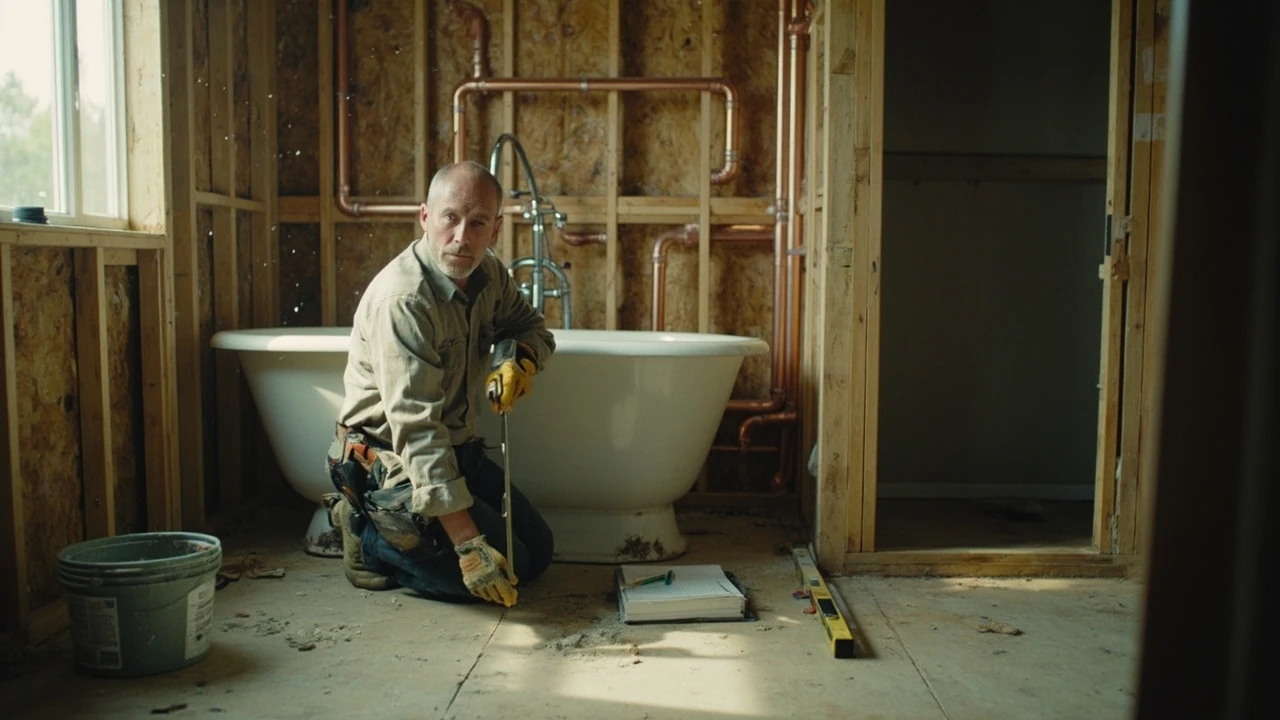
How much does it cost to replace a bathtub
The real answer to “how much does it cost to replace a bathtub” depends on what you actually mean by “replace.” A homeowner who only swaps the tub, leaves the tile and plumbing alone, and pays cash for a builder-grade model can land somewhere around $1,000 to $3,000 for the work. A homeowner who rips the bathroom down to the studs, moves the drain, retiles the walls, and upgrades the valve can spend $8,000 to $22,000 or more. Most of the difference is not the tub itself. It is the labor, the plumbing, the wall finishes, and the question of whether the old structure was hiding damage.
This guide walks through both ends of that range, the cost line items that drive the bill up or down, and the practical checks a careful homeowner can make before signing a contract. It is written for people who are weighing a one-for-one swap against a fuller remodel and want a realistic sense of where their money will go.
Two ways to “replace” a bathtub, and why the price changes
When contractors talk about replacing a bathtub, they usually mean one of two things. The first is a tub-only swap: the old tub comes out, a similar tub goes in, and the existing plumbing, valve, tile, and wall substrate stay where they are. The second is a full bathtub remodel: the tub, the walls, the floor, the valve, the drain, and the supply lines are all replaced together, often down to the studs.
The price difference between those two scopes is significant. According to a published cost breakdown from Shugarman’s Bath, tub-only replacements tend to land near $8,000 in their market, while a full remodel that addresses everything behind the walls can run $12,500 to $22,000 or more. That spread tracks with what most U.S. remodelers report in 2026, though regional labor rates and material choices can push either number up or down by 15 to 25 percent.
Knowing which scope you are pricing is the first step in getting a useful answer. A quote that sounds cheap may be cheap because it covers only the tub and not the valve, the surround, or the plumbing rough-in. A quote that sounds expensive may include demolition, disposal, waterproofing, tile, and a long labor warranty.
Typical price ranges by project scope
The table below shows what homeowners in different parts of the U.S. are seeing in 2026, broken out by project scope. The numbers are realistic ranges, not guarantees, and they assume a standard alcove tub in a 5-foot opening.
| Project scope | Typical 2026 cost range | What is included |
|---|---|---|
| Tub-only swap (DIY possible) | $400 to $1,200 | New tub, drain kit, basic tools, disposal of old tub |
| Tub-only swap (hired handyman) | $1,200 to $3,000 | Labor to disconnect, set, reconnect, and seal |
| Tub and surround replacement | $3,500 to $7,500 | New tub, acrylic or tile surround, faucet and trim, basic waterproofing |
| Full remodel down to studs (mid-range) | $8,000 to $14,000 | Demolition, plumbing rough-in, tub, tile walls, tile floor, standard valve, waterproofing |
| Full remodel down to studs (high-end) | $14,000 to $22,000+ | Cast iron or stone tub, custom tile, body sprays, niche, upgraded waterproofing system |
| Walk-in tub conversion | $5,000 to $15,000 | Specialty tub, door seal, anti-scald valve, electrical if needed |
Regional labor is the single biggest swing factor. A tub-only swap in a low-cost rural market can come in at the bottom of that range, while the same job in a dense metro area can sit at the top. Material choices move the needle a second time, and unexpected damage behind the walls moves it a third.
What is actually in a bathtub replacement quote
Most quotes are broken into the same handful of line items. Reading them carefully is the easiest way to compare two bids side by side, because contractors do not always bundle the same work the same way.
- Demolition and disposal of the existing tub, surround, and any tile that has to come off.
- Plumbing rough-in, including moving the drain, replacing the valve, and upgrading supply lines if they are old.
- The tub itself, which can range from a $200 pressed-steel alcove model to a $3,000 cast iron or stone resin tub.
- Wall surround or tile, which often costs more than the tub once labor is included.
- Waterproofing materials, including a PVC or rubber shower pan liner, backer board, and seam tape.
- Fixtures and trim, including the spout, valve trim, hand shower, and any grab bars or niches.
- Labor, which is usually 40 to 60 percent of the total on a full remodel.
- Permits and inspections, which are required in most jurisdictions when plumbing is moved.
If a quote is missing one of those items, it is worth asking. A bid that looks like $5,000 but does not include the valve, the surround, or the tile can quickly become a $9,000 project once the missing work is added in.
The line items that move the price the most
Once the scope is set, a few specific choices account for most of the swing between a low quote and a high quote on the same job.
Material of the tub
Acrylic and fiberglass tubs are the budget standard. They are light, easy to set, and forgiving of minor framing irregularities. Pressed steel is similar in price and a bit harder underfoot. Cast iron is heavier, more durable, and noticeably more expensive. Stone resin and solid surface tubs sit at the top of the range and are usually chosen for their look and their heat retention rather than their cost.
Wall surround
A three-piece acrylic surround is the fastest and cheapest wall finish, and a tile surround with proper backer board is the most common upgrade. Custom tile, large-format porcelain, or natural stone will push the labor number up sharply because the layout, cuts, and grout work all take longer.
Plumbing changes
If the drain stays in the same place and the valve is fine, plumbing is a small part of the bill. If the drain has to move for a new tub size, or the valve is being upgraded to a pressure-balanced or thermostatic unit, plumbing becomes a meaningful share of the cost. Replacing old galvanized or polybutylene supply lines while the wall is open is cheap relative to doing it later through a finished ceiling.
Waterproofing system
A traditional PVC shower pan liner with a mud bed is the conventional approach. A bonded waterproofing membrane such as Schluter KERDI is faster to install and easier to inspect, but the materials cost more. Either is acceptable if installed correctly, and either fails quickly if it is not.
Floor condition
Subfloor damage from a slow leak is one of the most common surprise line items. Once the tub is out, soft or rotten plywood has to be cut out and replaced before the new tub can be set. The For additional context, cost is usually modest, but it is the kind of thing that turns a fixed-price bid into a time-and-materials conversation.
Tub-only swap versus full remodel: a side-by-side comparison
The choice between these two scopes is really a choice about risk, warranty, and finish. The table below lays out the practical differences.
| Factor | Tub-only swap | Full remodel down to studs |
|---|---|---|
| Typical 2026 cost | $1,200 to $3,000 (or $8,000 per Shugarman’s data point) | $8,000 to $22,000+ |
| Demolition | Just the tub | Tub, surround, often tile, sometimes floor |
| Plumbing replaced | Usually not | Yes, including valve and supply lines |
| Wall seam | Likely visible at the tile line | Not an issue, walls are new |
| Waterproofing | Limited to what is there | Fresh pan liner, backer board, membrane |
| Hidden damage | Found later, more expensive to fix | Found and fixed during the project |
| Warranty length | Often one year on parts, sometimes none | Five years to lifetime on materials and labor |
| Resale impact | Marginal | Strong, especially in older homes |
A tub-only swap makes sense when the existing tile is in good shape, the valve is modern, the subfloor is sound, and the homeowner is planning a full remodel in a few years anyway. A full remodel makes sense when the bathroom is already showing its age, when there is any sign of a past leak, or when the homeowner expects to stay in the house long enough to use the new warranty.
How regional labor changes the answer
Labor rates are not uniform across the U.S., and they are the largest single variable in a bathtub replacement budget. The table below shows approximate 2026 hourly rates for licensed plumbers and tile setters in different regions. These are ranges, not quotes, and they reflect what homeowners are reporting in recent contractor bids.
| Region | Licensed plumber (per hour) | Tile setter (per hour) | Effect on total project |
|---|---|---|---|
| Rural Midwest and South | $65 to $95 | $45 to $70 | Lowest totals, fewer specialists |
| Mid-sized metros | $90 to $140 | $60 to $100 | Mid-range totals, more competitive bidding |
| High-cost coasts | $130 to $220 | $90 to $150 | Top-of-range totals, longer lead times |
Travel charges, minimums, and after-hours premiums can add to those numbers. In a high-cost metro, a three-day full remodel can spend $1,500 in labor before a single tile is set. In a rural market, the same three days might come in under $700.
Hidden costs that often catch homeowners by surprise
Even careful budgets get tripped up by work that was not visible until demolition. These are the line items that show up after the wall is open and that contractors have to address before they can move forward.
- Rotten subfloor or rim joist, usually from a long-standing slow leak around the drain or the caulk line.
- Old galvanized or polybutylene supply lines that have to be replaced to meet current code.
- Asbestos in old vinyl flooring or wall adhesive, which requires a certified abatement crew.
- Mold on the back of the wall board, which has to be remediated before the new surround goes on.
- Out-of-square framing, which adds time to shim, plumb, and level the new tub.
- Electrical work, especially if a new vent fan, heated floor, or jetted tub circuit is being added.
Most of these issues are inexpensive to address when they are found early. They are expensive when they are found after a remodel is supposed to be finished. This is one of the strongest arguments for opening the wall on purpose rather than hoping the old structure is fine.
What a good bathtub replacement warranty looks like
Warranties vary widely, and the difference between a meaningful warranty and a marketing line is worth understanding. A tub itself often carries a manufacturer warranty against defects, sometimes for the life of the product, but that warranty does not cover the installation. A one-year labor warranty is the most common baseline, and a lifetime labor warranty is the strongest coverage a homeowner can get.
According to the same Shugarman’s Bath breakdown of bathtub replacement costs, a tub-only swap usually comes with a one-year parts and labor warranty, while a full remodel from a reputable contractor can come with a lifetime warranty on both materials and labor for as long as the homeowner owns the home. That gap is real and worth asking about, because labor is the part that fails first when a remodel is rushed.
When comparing bids, ask each contractor to put the warranty in writing, including what it covers, what it excludes, and whether it transfers if the home is sold. A vague promise is not a warranty.
How to read and compare two or three quotes
Once the quotes start coming in, a simple comparison routine saves money and prevents misunderstandings. A useful sequence is to normalize the line items, check the inclusions, and look at the exclusions in the same place.
- List every line item from each quote on a single page, side by side.
- Mark which items are included, which are excluded, and which are listed as allowances.
- Substitute the same tub, valve, and tile into each quote so the materials are comparable.
- Ask each contractor to identify the single largest variable in their bid.
- Confirm the payment schedule, the start date, and the expected duration in writing.
- Confirm who pulls the permit, and who is on the hook if an inspection fails.
Two quotes that differ by $4,000 on the same scope almost always differ because of one of those points. Normalizing them turns “this one is cheaper” into “this one is cheaper because it does not include the valve” or “this one is cheaper because it assumes a builder-grade tub.”
When a DIY tub replacement actually makes sense
A motivated homeowner with plumbing experience can replace an alcove tub for the cost of materials, often in the $400 to $1,200 range. The conditions under which this is a reasonable choice are narrow but real.
- The new tub is the same size and the same drain location as the old one.
- The valve, the supply lines, and the drain are all in good condition and up to code.
- The wall surround is in good shape and can be reused without an obvious seam.
- The homeowner has a helper, the right tools, and a plan for disposing of the old tub.
- The local jurisdiction does not require a licensed plumber for a like-for-like swap.
Outside of those conditions, a DIY job tends to run into trouble. Cast iron tubs weigh 300 to 500 pounds and are dangerous to remove without the right equipment. Moving a drain even an inch changes the project from a swap to a remodel. Code work almost always requires a permit and an inspection.
Financing the project without losing control of the budget
Most homeowners do not pay cash for a full bathroom remodel. The two most common approaches are a home equity loan or a contractor financing plan. Both have trade-offs that are worth weighing before signing.
- Home equity loan or HELOC: lower rates, longer terms, but the home is the collateral.
- Contractor financing: faster approval, sometimes no interest for a promotional period, but higher rates after the promo ends.
- Credit card: useful for small jobs and DIY purchases, expensive for anything longer than 12 months.
- Cash discount: a meaningful number of contractors will knock 5 to 10 percent off the total for payment in full on the first day.
Whichever route is chosen, locking the scope, the materials, and the allowances in writing before financing closes is the simplest way to keep the final bill from drifting past the approved amount.
Frequently asked questions
What is the average cost to replace a bathtub in 2026?
Most U.S. homeowners in 2026 are paying between $1,200 and $22,000 for a bathtub replacement, depending on the scope. A tub-only swap usually lands between $1,200 and $3,000 with a hired pro, while a full remodel down to the studs usually lands between $8,000 and $22,000. The national midpoint for a mid-range full remodel is roughly $12,000 to $14,000.
Is it cheaper to replace the tub or refinish it?
Refinishing a tub in place costs roughly $400 to $900 and lasts 5 to 10 years with careful cleaning. Replacing a tub costs $1,200 to $3,000 for a swap, or several times more for a full remodel, and lasts 20 years or more. Refinishing wins on upfront cost; replacement wins on lifespan and on the ability to address hidden damage.
How long does a bathtub replacement take?
A tub-only swap usually takes 1 to 2 working days. A full remodel down to the studs usually takes 1 to 3 weeks, depending on tile choice, inspection timing, and any hidden damage. Custom tile, large-format porcelain, and specialty tubs add time at the end of the schedule.
Can I replace a bathtub without replacing the tile?
Yes, but the result is usually a visible seam where the new tub meets the old tile. The new wall finish rarely lines up perfectly with the old, and a horizontal seam at the tub line is hard to hide. Most full bathroom contractors recommend replacing at least the first two rows of tile to keep the joint clean.
Do I need a permit to replace a bathtub?
In most U.S. jurisdictions, a like-for-like tub swap does not require a permit. Any work that moves plumbing, replaces the valve, or changes the electrical requires a permit and an inspection. The contractor should pull the permit; if the homeowner is doing the work, the homeowner pulls it.
What is the most expensive part of a bathtub replacement?
On a full remodel, labor is the single largest cost, usually 40 to 60 percent of the total. Within materials, the wall surround or tile, plus the valve and trim, usually cost more than the tub itself. Demolition and disposal are smaller line items but show up in every quote.
How do I pick a contractor for a bathtub replacement?
Look for a licensed and insured plumbing or remodeling contractor with a physical address, a written warranty, and recent local references. Ask for a copy of the license, a copy of the insurance certificate, and the name of the plumber who will actually do the work. Get at least three bids and avoid any contractor who asks for more than 30 percent up front.
What questions should I ask before signing a bathtub replacement contract?
Ask whether the quote is fixed-price or time-and-materials, what happens if hidden damage is found, who pulls the permit, what the warranty covers in writing, how long the project will take, and what the payment schedule looks like. The answers to those questions matter more than the number at the bottom of the quote.
Are walk-in tubs worth the cost?
Walk-in tubs cost $5,000 to $15,000 installed in 2026, more than a standard alcove replacement. They are worth considering for homeowners with mobility or balance concerns, especially when the alternative is a fall-related injury. They are not a strong resale upgrade, so the decision is usually about daily use rather than future value.
How can I save money on a bathtub replacement without cutting corners?
Keep the drain and the valve in the same place, choose a standard alcove tub size, pick a three-piece acrylic surround instead of custom tile, and bundle the work with any other plumbing project so the plumber is already on site. Those four choices can save 20 to 35 percent on a full remodel without changing the warranty or the long-term durability.




Leave a Reply