
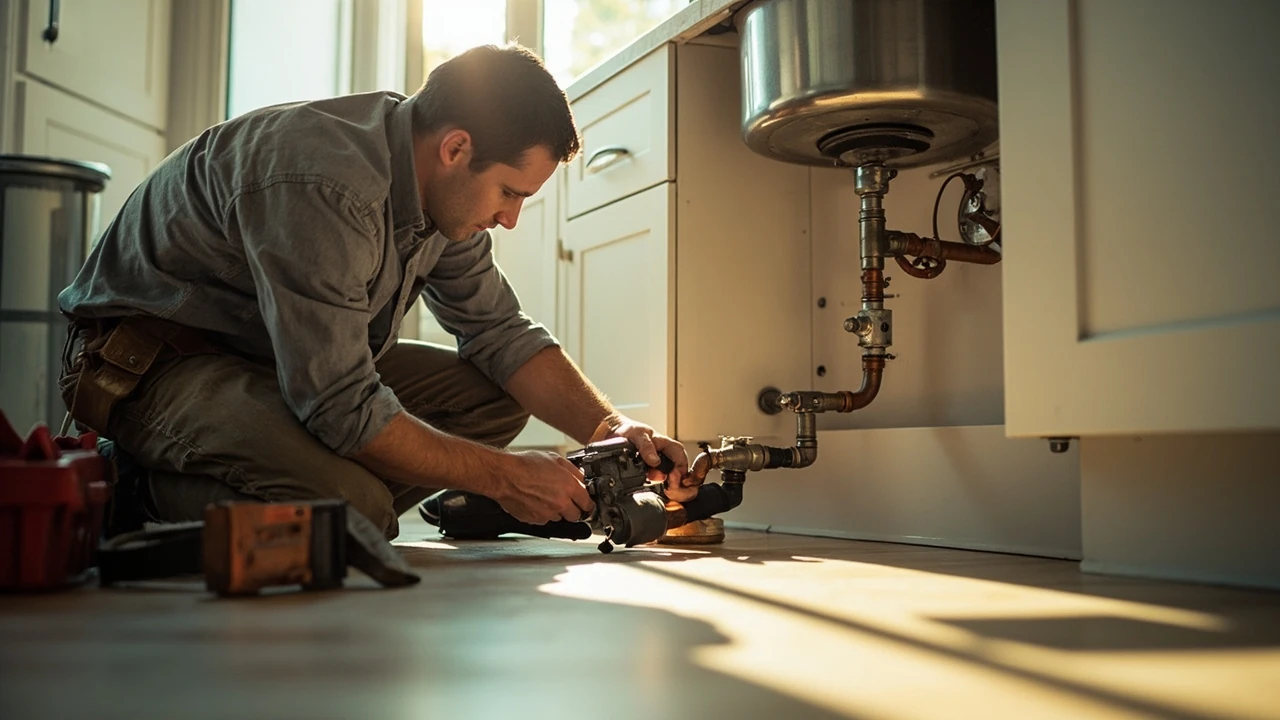
Plumbing repair cost: what shapes the number on your invoice
A leaking shut-off valve under a kitchen sink can leave a small puddle on the cabinet floor, but the bill that follows the plumber’s visit is rarely small. Most homeowners are surprised less by the leak itself than by the wide range of prices they hear from neighbors, online calculators, and contractor quotes. A realistic plumbing repair cost depends on the type of failure, where the pipe lives inside the home, the time of day you call, and the regional labor market you live in. Understanding those moving parts is the difference between budgeting for a routine service call and being caught off guard by a four-figure invoice after a weekend emergency.
This guide walks through the way plumbers build their prices, the cost bands for the most common household repairs, and the practical questions to ask before signing a work order. It also covers when a repair stops being worth it, how home warranties and insurance interact with plumbing work, and what to do when a single fixture keeps failing. The goal is not to predict your exact bill to the dollar, because no honest source can do that, but to give you a working framework so the number you eventually pay makes sense.
How plumbers build a plumbing repair cost estimate
Plumbers do not price by the hour the way some trades do, even though labor time is the biggest single component of most bills. A typical service call combines a base trip charge, a diagnostic fee, labor time, and materials, then layers on regional and timing factors. Reading your estimate with that structure in mind makes it much easier to compare two quotes side by side.
The four building blocks of every quote
- Service or trip charge. A flat fee that covers the plumber driving to your home, walking the job, and writing up the estimate. Many companies roll this into the first hour of labor, but it is always there in some form.
- Diagnostic time. Time spent finding the actual failure. A dripping faucet is obvious, but a slab leak or a slow drain that backs up into the laundry room can take real investigation.
- Labor for the repair. The hands-on work to cut, solder, tighten, replace, or test. This is usually the largest line on the invoice.
- Materials and parts. Fittings, valves, supply lines, pipe, sealants, and sometimes a new fixture. Markups on parts are common, and specialty items cost more than commodity fittings.
Why quotes for the same job can be hundreds of dollars apart
Two companies can look at the same leaky toilet and return wildly different numbers. The difference usually comes down to overhead, warranty terms, and how the company trains its technicians. A one-truck owner-operator has lower overhead than a branded service with uniformed techs, a stocked warehouse, and a 24/7 call center. Both can be legitimate. The branded company is usually more expensive but may include a longer warranty and a faster emergency response.
Regional labor markets also matter. A licensed plumber in a high-cost coastal metro will charge more per hour than the same trade in a smaller inland city, even though the materials cost is similar. Local licensing rules, insurance requirements, and the cost of doing business all feed into the final number on the invoice.
Typical plumbing repair cost ranges by job type
The numbers below are national ballpark figures meant to help you sanity-check a quote, not replace one. Your local market, the condition of the existing pipe, and accessibility of the leak will all push your final bill up or down. A useful habit is to ask each contractor to break their estimate into labor, parts, and trip charge, then compare those three lines separately.
| Repair type | Typical cost range | Main cost drivers |
|---|---|---|
| Leaking plumbing pipe repair, accessible | $150 – $450 | Pipe material, access, drywall removal |
| Leak in wall or ceiling | $350 – $850 | Opening and patching the wall, leak location |
| Slab leak detection and repair | $500 – $4,000+ | Detection method, reroute vs. break concrete |
| Toilet repair (flapper, fill valve, wax ring) | $100 – $300 | Parts quality, flange condition |
| Faucet repair | $100 – $350 | Cartridge vs. full replacement, brand |
| Water heater repair | $150 – $800 | Gas, electric, or tankless; parts availability |
| Drain cleaning, single fixture | $100 – $300 | Snake vs. hydro jet, clog location |
| Main sewer line clear or repair | $250 – $3,000+ | Access point, depth, root intrusion |
| Sump pump replacement | $400 – $1,200 | Pump capacity, pit condition, electrical work |
| Garbage disposal replacement | $150 – $500 | Horsepower, electrical work, switch type |
For a baseline national figure, Homewyse’s plumbing leak repair estimate places the average job in the high $300s for a basic leak, which tracks with the “accessible pipe” row above. The cost to repair a plumbing leak on that site is broken into labor, materials, and regional adjustment so homeowners can see what really drives the number. Independent reference data like this is useful for a quick check, but the on-site conditions in your home will always matter more than any online average.
The hidden cost drivers that move a quote up or down
Every plumber knows that the same problem in two homes can take very different amounts of time. The visible failure is the same. The work that disappears behind walls, under floors, and into crawl spaces is rarely the same. A handful of variables show up again and again in real estimates, and they explain why a “simple” repair can suddenly cost a lot more than the phone quote suggested.
Access and location of the failure
A pinhole leak on a copper elbow inside an open basement ceiling is a quick fix. The same leak behind a tiled shower wall requires opening the wall, making the repair, and rebuilding the surface, which can add several hundred dollars and a follow-up visit from a tile pro. Slab leaks, where a pipe under a concrete foundation has failed, sit at the extreme end of this spectrum because reaching the pipe may require breaking the slab, tunneling, or rerouting the line through the attic.
Time of day and day of week
Most plumbing companies charge a premium for evenings, weekends, and holidays. A burst pipe at 11 p.m. on a Sunday will commonly carry an after-hours multiplier of 1.5x to 2x on labor, on top of the standard service charge. If the situation allows you to wait until the next business day, scheduling a regular appointment is one of the easiest ways to control plumbing repair cost.
Pipe material and age of the system
Older galvanized steel or polybutylene lines often need more than a single spot repair. Once a plumber opens a wall and finds a section that is corroded through in several places, the responsible recommendation is usually to replace a longer run, not patch one hole. That recommendation is good for your home, but it does raise the bill.
Permits, code upgrades, and inspections
Some jurisdictions require a permit for water heater replacements, sewer line work, and any repair that involves a new gas line. The permit fee itself is usually modest, but the requirement to bring the surrounding work up to current code can add labor. A water heater replacement in a garage, for example, may require a new drip pan, a code-compliant discharge line, or a seismic strap, all of which show up on the invoice.
Diagnostic complexity
Not every leak reveals itself. A ceiling stain on the first floor can be caused by a failing wax ring on an upstairs toilet, a leaking tub spout, or a pinhole in a copper riser. Plumbers charge for the time it takes to narrow the cause, and that time is one of the least appreciated parts of a plumbing repair cost estimate. Ask for an estimate range, not a single number, when the diagnosis is the main unknown.
Plumbing repair cost vs. replacement: when repair stops making sense
There is a point in the life of every fixture, valve, and pipe where another repair is just throwing money at a system that is ready to be replaced. The “50 percent rule” is a useful starting point: if the cost of a single repair is more than half the cost of a full replacement, and the existing unit is past the midpoint of its expected service life, replacement usually wins on a five-year cost basis.
| Component | Typical service life | Repair vs. replace signal |
|---|---|---|
| Toilet (porcelain body) | 25 – 50 years | Replace if flange or subfloor is rotted |
| Standard water heater (tank) | 8 – 12 years | Replace if tank is leaking or anode is spent |
| Tankless water heater | 15 – 20 years | Repair heat exchanger only if under warranty |
| Main sewer line (cast iron) | 50 – 80 years | Replace if multiple root intrusions in 3 years |
| Water supply lines (copper) | 50 – 70 years | Replace if multiple pinholes appear in one year |
| Garbage disposal | 8 – 15 years | Replace if motor fails or housing cracks |
A second signal is repair frequency. A toilet that needs a new flapper every six months is not failing, it is just wearing out, and a full replacement with a modern efficient model is usually cheaper over time. A water heater that has had two control board replacements in three years is showing the same pattern. The decision is rarely urgent, and a careful plumber will lay out both options so you can make a real comparison rather than just a quick patch.
How warranties, home warranties, and insurance change the math
Plumbing repair cost is not always paid out of pocket. Manufacturer warranties cover many parts for several years, and a few components, like tankless water heater heat exchangers, can carry longer coverage. A home warranty purchased at closing can also pick up repair or replacement costs for covered systems, with a service call fee and exclusions spelled out in the contract.
Homeowner’s insurance, on the other hand, almost never pays for a repair that fails on its own. A pinhole leak that dripped for a week before being discovered is generally a maintenance issue, not a covered loss. What insurance often does cover is the resulting water damage, the cost to open the wall, and the cost to dry out the area, especially if you mitigate quickly. The distinction between “repair” and “damage” is one of the most important things to clarify with both your insurer and your plumber before major work begins.
What to document before any work starts
- Photographs and short videos of the leak, the affected area, and any water spread.
- The date and time the issue was first noticed and when it was reported.
- Any mitigation steps you took, such as shutting off the supply valve or running fans.
- Copies of every written estimate and the final invoice with line items.
- The model and serial number of any failed equipment, for warranty claims.
How to compare plumbing repair cost quotes without getting fooled
Price is the easiest thing to compare and the easiest thing to misread. A lower bid that excludes drywall patching, permit fees, or after-hours multipliers is not actually a lower bid once those items are added. A useful comparison treats every quote as a list of line items and asks the same five questions of each contractor.
Five questions to ask every plumber before signing
- Is the trip charge separate from the first hour of labor? This tells you how the company prices its time and whether two quotes are really using the same structure.
- What is the warranty on labor and on parts? A one-year labor warranty is common, and a longer warranty often signals a more confident shop.
- Is this a flat rate or time and materials? Flat rate is easier to budget. Time and materials can be cheaper for a small fix, but it can balloon if the job runs long.
- Are permits included if required? You want a clear answer so you do not get a surprise visit from your building department later.
- What conditions would change the price on the day of the work? A good plumber will describe the scenarios that justify a change order before starting.
Two quotes can be the same total and still feel different if one is flat rate and the other is time and materials, or if one includes cleanup and the other does not. Ask each contractor to clarify scope in plain English and put it in writing. A one-page estimate that lists parts, labor hours, and exclusions is worth more than a polished PDF without detail.
Reducing plumbing repair cost without cutting corners
The cheapest plumbing repair is the one you do not need. Preventive habits will not eliminate every service call, but they will meaningfully reduce how often you make one, and they will make the calls you do make smaller. A handful of practical habits protect both the pipes and the budget.
Pressure, temperature, and water chemistry
High water pressure is one of the most common causes of premature plumbing failure. A pressure regulator set above 80 psi stresses supply lines, washing machine hoses, and water heater connections. A simple pressure gauge on an outdoor spigot gives you a five-minute reading. If the pressure is high, a plumber-installed pressure reducing valve usually pays for itself within a few years in avoided leaks.
Hard water has a similar long-term effect. Mineral scale narrows pipe diameter, builds up on water heater elements, and clogs faucet aerators. A water softener is not strictly a plumbing repair, but it is a major factor in keeping repair bills low over the life of a home.
What to do the moment you spot a leak
- Shut off the closest supply valve, or the home’s main shutoff if the local valve does not work.
- Open a faucet at the lowest point of the house to drain residual pressure.
- Photograph the leak and any visible water damage for insurance records.
- Move belongings out of the affected area and start a fan or dehumidifier.
- Call a licensed plumber and describe both the symptom and the location in clear terms.
These five steps do not reduce the size of the eventual repair, but they reduce the size of the damage, the cost of mitigation, and the chance that the plumber has to do extra work just to reach the failed section.
When a low plumbing repair cost is a red flag
A bargain quote is sometimes a legitimate shop building its book of business. It is also sometimes a sign of an unlicensed handyman, a missing permit, or a part that is not rated for your application. Three signs suggest the lower price is too good to be true. The contractor cannot produce a current license and insurance certificate. The estimate is a single number on a napkin with no breakdown. Or the parts list includes a name you have never heard of, with no manufacturer documentation available.
Unlicensed plumbing work is one of the most common sources of cross-system damage. A bad solder joint can flood a ceiling. An improper gas line connection is a safety hazard. An unpermitted sewer tap can derail a home sale. A modest premium for a licensed, insured plumber is one of the better insurance policies a homeowner can buy.
Regional patterns that affect plumbing repair cost
National averages hide a lot of regional variation. A few patterns show up consistently in pricing data and contractor conversations.
- Coastal metros tend to sit at the top of the range for labor, sometimes 30 to 50 percent above the national average.
- Cold-winter regions see more frozen-pipe emergencies, which can push emergency pricing up during major cold snaps.
- Aging housing stock in older cities drives more slab leak and galvanized replacement work.
- Newer Sun Belt growth areas often have lower labor rates but higher callout distances, which shows up as a larger trip charge.
Local context is one of the reasons a national average is only a starting point. If you are budgeting for a specific repair, two or three quotes from local, licensed contractors will be more useful than any online calculator.
Special cases that change the cost conversation
Some plumbing repairs do not fit the standard service-call model. They involve more planning, more coordination, and often more permits. A short list of these special cases helps set expectations before you start gathering quotes.
Slab leaks
A slab leak is a supply line failure under a concrete foundation. Detection alone can run several hundred dollars, and the repair options vary widely. A direct access repair breaks the slab at the leak point and patches the line. A reroute abandons the failed section and runs new pipe through the attic or walls. Reroutes are usually more expensive up front but offer a longer-term fix with less future risk of another slab failure.
Main sewer line replacement
When the main line from the house to the street is failing, the conversation moves from plumbing repair cost to project cost. Traditional excavation can run into the low five figures. Trenchless methods such as pipe lining or pipe bursting are often competitive on price and dramatically reduce landscape damage. Either way, this is a job that benefits from a video camera inspection before any contract is signed.
Water heater replacement under emergency conditions
A failed water heater is rarely the right moment to comparison shop. Plumbers are used to this and will offer same-day swaps with a standard tank unit as the default. The trade-off is a smaller selection of efficiency ratings and a higher plumbing repair cost than a planned replacement. If your water heater is over ten years old, scheduling a planned replacement before failure is one of the easiest ways to control the bill.
A practical budget framework for homeowners
Plumbing repair cost is unpredictable by nature, but a small reserve fund goes a long way. Many financial planners suggest keeping a dedicated home repair reserve that covers the realistic worst case, not the average case. A useful starting point is a few thousand dollars for routine repairs and a separate line for catastrophic events like a sewer line failure or a slab leak.
Pair the reserve with a short list of trusted contractors, including a general plumber, a drain and sewer specialist, and a water heater installer. When an emergency hits, you are not researching from scratch at midnight, you are calling someone you have already vetted. That single habit is one of the cheapest ways to keep plumbing repair cost from turning into plumbing repair shock.
Frequently asked questions
What is the average plumbing repair cost for a leaking pipe?
For an accessible leak, a common range is roughly $150 to $450, with most simple jobs landing in the high $200s to low $300s before parts. The number rises quickly if the leak is behind a wall, in a ceiling, or under a slab, because access work can add several hundred dollars on its own.
Do plumbers charge by the hour or by the job?
Many residential plumbers use flat-rate pricing, where the company sets a fixed price for a defined repair. Others use time and materials, which bills the actual hours worked plus parts. Flat rate is easier to budget, while time and materials can be cheaper for very small jobs but exposes you to overruns on larger ones.
Why is after-hours plumbing so expensive?
After-hours rates cover the cost of keeping a technician on call, the overtime premium, and the higher chance of a complex or messy emergency. A burst pipe or a sewage backup cannot wait, and the premium reflects the fact that a real human is responding to your home at an unusual hour.
Can homeowner’s insurance cover plumbing repair cost?
Insurance usually covers the resulting water damage and the cost to access the leak, but not the failed part itself. The exact coverage depends on the policy and the cause of the failure, which is why documenting the timeline and taking photos as soon as you spot a leak matters so much.
How do I know if I should repair or replace a fixture?
Compare the repair cost to about half the cost of a full replacement, then factor in the age of the fixture. If the unit is past the midpoint of its expected life and repairs have been frequent, replacement usually wins on a five-year cost basis. A reputable plumber will lay out both numbers without steering you toward the more expensive option.
Is a home warranty worth it for plumbing repairs?
For older homes with original plumbing and water heaters, a home warranty can pay for itself in a single covered event. The fine print matters: most plans have a service call fee per visit and exclude certain types of failures. Read the contract before you need it, not after.
How can I lower my plumbing repair cost over time?
Control water pressure, address small leaks early, and avoid chemical drain cleaners that damage pipes. A short annual walkthrough of visible supply lines, valves, and the water heater area catches most problems before they become emergencies.
Are permits always required for plumbing repairs?
Not always. Minor repairs like replacing a faucet or a toilet typically do not need a permit. Water heater replacements, sewer line work, and any gas line work usually do. Your plumber should know the local rules, and the building department can confirm in a short phone call.
What information should I have ready when I call a plumber?
Have the age of the home, the location and symptom of the problem, the type of fixture or pipe involved, and any photos or videos you can share in advance. The more specific the description, the more accurate the phone estimate will be, and the less time the plumber has to spend on diagnosis once on site.
How do I find a trustworthy plumber?
Look for a current license and insurance certificate, read recent local reviews, and ask for two or three references on similar jobs. A clear written estimate, a defined warranty, and a willingness to explain alternatives are stronger signals than the lowest price on the page.



Leave a Reply