
How much is a cord of firewood
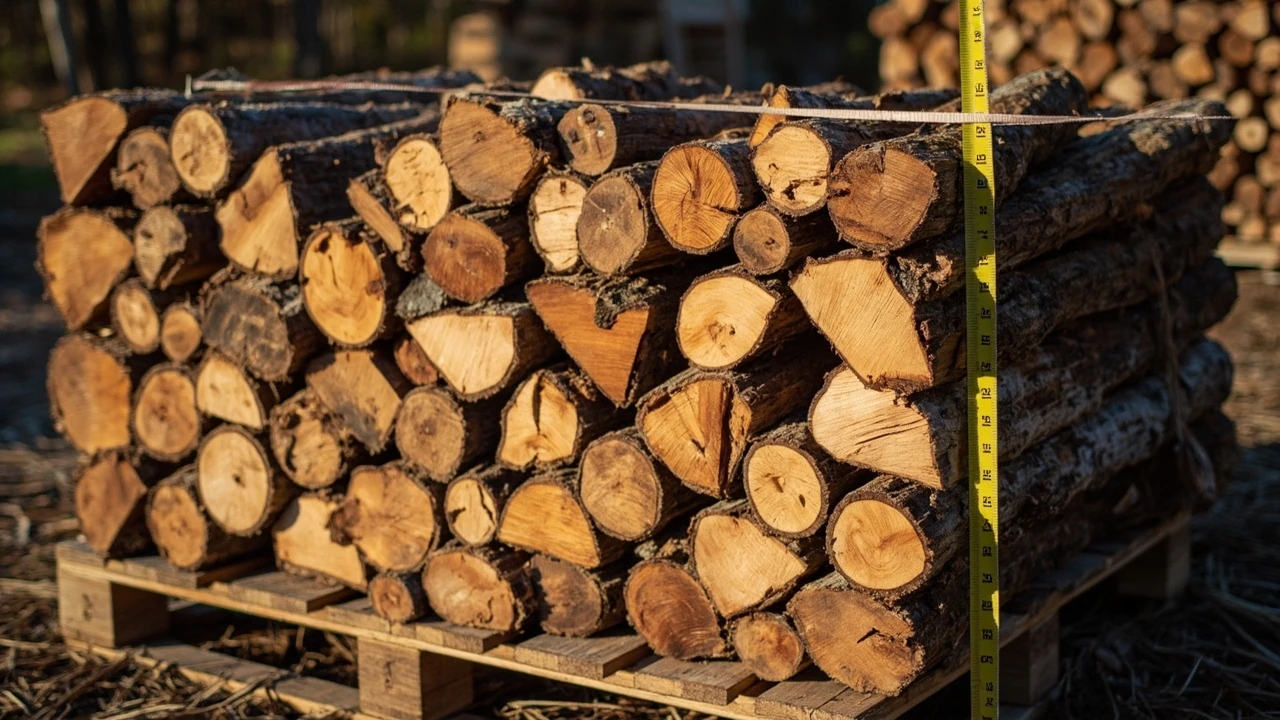
A full cord of firewood is a precisely measured stack that occupies 128 cubic feet, arranged as 4 feet tall by 4 feet deep by 8 feet long, with the logs aligned, parallel, and touching. That single number answers the literal size question, but it tells you almost nothing about what you will actually pay, how heavy the load will be, or whether the wood you receive from a local supplier really equals a full cord. Those are the practical questions that determine whether a firewood purchase is a fair deal.
Buyers run into trouble when sellers use vague terms like face cord, rick, or stove cord without a measurement. A stack that looks generous on the tailgate can still fall short of the legal definition once the air gaps between logs are accounted for. Understanding the difference between stacked volume and actual wood volume is what separates a confident buyer from someone who has to argue in the driveway about whether the pile is “ranked and well stowed.”
The legal definition of a full cord
Firewood sold by the cord in the United States is measured by stacked volume, not by the solid wood itself. The standard is 128 cubic feet, which works out to a stack 4 feet high, 4 feet deep, and 8 feet long. The logs must be stacked in a way that minimizes air gaps so the measurement reflects what is actually there.
This matters because two stacks with identical outer dimensions can hold very different amounts of usable wood. A loosely tossed pile might measure 128 cubic feet on the outside yet contain only 80 to 90 cubic feet of solid wood once the air pockets between round or split pieces are subtracted. Industry guidance treats roughly 90 cubic feet of solid wood as a realistic figure for a well-built full cord, even though the legal volume remains 128 cubic feet.
The phrase “ranked and well stowed” comes from historical firewood law and is still used to describe a properly stacked cord. Ranked means the pieces are lined up in even rows rather than thrown in at random. Well stowed means they are packed tightly so the gaps are as small as possible. If a seller cannot or will not stack the wood this way, the same outer dimensions can hide a substantial shortfall.
Common cord measurements at a glance
Most firewood confusion comes from terms that look like cord measurements but describe different things. The table below compares the standard sizes a buyer is most likely to encounter, so the words on a price sheet translate into a real volume.
| Term | Typical dimensions (H x D x L) | Stacked volume | Notes |
|---|---|---|---|
| Full cord | 4 ft x 4 ft x 8 ft | 128 cubic feet | Standard legal measure in the U.S. |
| Half cord | 4 ft x 4 ft x 4 ft | 64 cubic feet | Exactly half of a full cord |
| Quarter cord | 2 ft x 4 ft x 4 ft (typical) | 32 cubic feet | Often sold for small stoves or fireplaces |
| Face cord (or stove cord) | 4 ft x 4 ft x (length of one log) | Varies by log length | Not a fixed volume; depends on cut length |
| Thrown cord | Loosely loaded 128 cu ft container | 128 cubic feet, but less solid wood | Often less wood than a stacked cord |
The face cord is the most common source of disputes. A face cord is one row of a full stack, so its length matches whatever the producer cuts the logs to, often 16 inches but sometimes 18 or 24 inches. A face cord cut to 16-inch logs is exactly one third of a full cord, but a face cord cut to 24-inch logs is one half. The price should scale with that ratio, and any seller who charges face-cord prices as if every cut were the same length is quoting a volume that does not exist.
How much does a cord of firewood weigh
Weight varies far more than volume because wood species differ in density and moisture content changes everything. Green, freshly cut wood can weigh more than twice as much as the same volume of seasoned wood because water is heavy. Two homeowners buying identically sized cords can receive loads that differ by a ton or more.
A general working range for a full cord is 2,500 to 5,000 pounds. Softwoods like pine, spruce, and cedar cluster at the lighter end, while dense hardwoods like oak, hickory, and beech sit at the heavy end. The moisture content of the wood is the single biggest factor inside that range, often a larger swing than the species difference itself.
| Wood category | Typical seasoned weight per full cord | Typical green weight per full cord | Heat value per cord (approx.) |
|---|---|---|---|
| Softwood (pine, spruce, fir) | Around 2,000 to 2,500 lb | Up to 3,500 lb or more | Lower, burns faster |
| Mid-density hardwood (maple, birch, beech) | Around 3,000 to 3,800 lb | Up to 4,500 lb or more | Moderate, steady burn |
| Dense hardwood (oak, hickory) | Around 3,800 to 4,500 lb | Up to 5,000 lb or more | Highest, longest burn |
These figures are useful planning numbers rather than precise weights. A cord of oak that has been drying for two years in a covered shed will weigh less and burn hotter than a cord of oak cut last spring and left in the rain. If a seller advertises weight rather than volume, the same caveats apply: ask whether the weight was measured before or after drying, and on what scale.
What affects the cost of a cord of firewood
There is no fixed national price for a cord of firewood, and that is the first thing any buyer should accept. Firewood behaves more like a regional commodity than a manufactured product, with prices swinging by region, season, and species. The variables below are the ones that move price the most.
- Species: dense hardwoods that burn longer and produce more heat generally cost more per cord than softwoods.
- Seasoning: kiln-dried or fully air-dried wood commands a premium because it lights easily and produces less creosote.
- Region and supply: areas with active logging usually have lower prices than areas where wood has to be trucked in.
- Season of purchase: late summer and early fall often cost more because demand spikes before the heating season.
- Delivery distance: a short local haul is cheaper than a long-distance truckload, and stacking may or may not be included.
- Cut length and splitting: wood cut to a specific stove length and split to a uniform size costs more than rough rounds.
How much is a cord of firewood in dollars depends on the combination of those factors. Even within one state, two neighboring towns can post prices that differ noticeably because of supply, hauling cost, and local competition. The honest answer to the price question is a range, not a single number, and the range is set by the variables above rather than by a national schedule.
How to check that you are actually getting a full cord
The single most useful buyer skill is being able to verify the stack rather than the receipt. A seller can write “full cord” on an invoice and still deliver a short load if the buyer does not check. The checks below catch the most common shortfalls before the truck leaves the driveway.
- Ask the seller to stack the wood in a single rectangular pile so the dimensions can be measured.
- Measure the height from the ground to the top of the stack, the depth from front to back, and the length along the stack.
- Confirm the three numbers multiplied together equal 128 cubic feet, and that the wood is stacked tightly enough to qualify as ranked and well stowed.
- Look at the cut length of a few logs to confirm they are consistent. Inconsistent lengths often mean the seller is mixing leftover pieces into a face-cord stack.
- Ask for a written receipt that lists the species, the volume, whether the wood is seasoned, and the moisture content if it was measured.
If the seller delivers the wood in a truck and dumps it without stacking, the buyer has very little way to confirm volume. A reasonable compromise is to pay only for a measured stack and not for a thrown load, or to require that the wood be restacked before final payment.
Seasoned versus green firewood
Seasoning is the process of drying cut wood until its moisture content drops low enough to burn cleanly. The standard target is below 20 percent moisture, which is the point at which wood lights reliably, produces good heat, and creates far less creosote in a chimney. Cut wood from suppliers often starts near 50 percent moisture, and the air-dry process that follows is what turns it into usable fuel, a step detailed in an overview of cord measurement and firewood handling from Better Burn Firewood, where the standard 128 cubic foot rule and the ranked-and-well-stowed stacking practice are spelled out for buyers who want a second reference.
Seasoning takes time. Air-drying a split softwood under cover usually takes at least six to nine months, and dense hardwoods such as oak often need a full year or more. Kiln drying speeds the process dramatically and can bring oak from over 50 percent moisture down toward 20 percent in a few days at high temperature, though the fuel and equipment costs are reflected in the price.
Buyers can check moisture with a simple pin or pinless moisture meter. A reading in the high teens or low twenties on a freshly split face indicates properly seasoned wood. Readings in the thirties and forties mean the wood will still smoke heavily and lose a large share of its energy to evaporating water rather than heating a room.
How much firewood a household actually needs
The right amount of wood for a season depends on the size of the home, the efficiency of the stove or fireplace, the climate, and how often the fire runs. A rough planning framework can help a buyer avoid both running out in February and overpaying for a surplus that sits in the yard for two summers.
- Occasional fireplace use in a mild climate: a face cord or half cord is often enough for a winter.
- Regular supplemental heat in a moderate climate: two to three full cords covers most households.
- Primary heat source in a cold climate: four to six full cords is a common starting point, with adjustments for insulation and stove efficiency.
These numbers are starting estimates rather than guarantees. A house with a new, efficient wood stove and good insulation can burn half as much wood as a drafty house with an older fireplace insert. The most reliable way to plan a season is to look at what was actually burned the previous year and adjust from there.
Hardwood versus softwood in practical terms
The species discussion often comes down to heat per cord, heat per pound, and how the wood behaves in a fire. Hardwoods such as oak, hickory, maple, beech, and birch are denser, give up more heat per cord, and tend to produce longer, steadier coals. Softwoods such as pine, spruce, and fir are lighter, ignite quickly, and are useful for kindling or shoulder-season fires when less heat is needed.
Softwood can be a sensible buy for someone who only lights an occasional weekend fire, because the lower price per cord can offset the lower heat content. A household relying on wood for real heating usually does better paying more for dense hardwood, because fewer cords are needed to deliver the same amount of usable heat. One useful way to compare is to ask sellers for the species and then check published heat values per cord so the price can be translated into a cost per unit of heat rather than a cost per pile.
Common firewood scams and how to spot them
Firewood is one of the few retail products where the buyer often cannot see the final product before paying, which creates room for the same shortfalls to appear over and over. The list below describes the most common versions.
- Face cord sold as a full cord: a single row 4 feet tall and 8 feet long with short logs is only a fraction of a full cord, but the invoice says “cord.”
- Thrown load counted as a cord: a loosely dumped truck bed measured by outer volume has far less solid wood than a tightly stacked pile of the same size.
- Green wood sold as seasoned: the wood weighs more and is harder to verify, so a quick visual check is not always enough. A moisture meter is the only reliable test.
- Mixed species priced as premium hardwood: softwood mixed into a hardwood load lowers the heat value and should not be billed at the hardwood rate.
- Short delivery: a partial cord dropped off with no measurement leaves the buyer with no easy way to confirm what is missing.
The defense in each case is the same: a written agreement that lists species, volume, moisture content, and stacking, plus a willingness to measure the stack on arrival. Sellers who refuse those terms are usually the ones whose loads do not measure up.
Storage and stacking once the cord arrives
How the wood is stored after delivery affects how well it burns for the rest of the season. Wood that gets soaked repeatedly will reabsorb moisture and behave like green wood in the stove, even if it was seasoned when delivered. A few basic practices keep a cord in good shape from the time it arrives until the last log is burned.
- Stack the wood in single rows rather than against a solid wall, so air can move through the pile.
- Keep the top covered with a tarp or under a simple shed roof, but leave the sides open for airflow.
- Set the bottom row on pallets, scrap lumber, or a gravel base so the wood does not sit in standing water.
- Stack with the bark side up or down consistently, because uniform stacking sheds water more reliably.
- Keep the stack a few inches away from the house to discourage pests and allow the wall to dry between storms.
A well-stored cord can lose several percentage points of moisture over a single summer, which is the difference between a fire that lights on the first match and one that smokes and sputters for twenty minutes before producing useful heat.
The cost of firewood in the broader home energy picture
How much is a cord of firewood really worth depends on what it is compared against. A cord of seasoned hardwood can deliver a useful amount of heat, and for households in cold regions that heat can be substantially cheaper per unit than electricity, propane, or heating oil. The comparison only holds when the stove is efficient, the wood is dry, and the household uses the fire in a controlled way rather than leaving it burning all day.
For a household that already has a working stove, the question is whether the next cord of wood costs less than the next therm of gas or the next gallon of oil, accounting for the labor of stacking and the wear on the stove. That calculation is different for every home, but it is the only honest way to decide whether firewood is a bargain or an expensive habit.
For households that are still deciding whether to add a wood stove, the price of a cord is only one line in a much longer budget. Stove cost, chimney installation, permits, insurance, and the time spent cutting or sourcing wood all belong in the same conversation before the first log is ordered.
How much is a cord of firewood, summarized
- By volume: 128 cubic feet, arranged as 4 feet tall by 4 feet deep by 8 feet long.
- By weight: 2,500 to 5,000 pounds, depending on species and moisture content.
- By price: a regional range that moves with species, seasoning, and supply rather than a fixed number.
- By quality: only “ranked and well stowed” wood is legally a full cord, regardless of how it is described on the invoice.
The next step for any buyer is a quick local check: ask two or three sellers for species, volume, moisture content, and whether stacking is included, then compare those answers on a per-cord basis before the truck arrives. That short conversation usually saves both money and arguments.
Frequently asked questions
What is the exact size of a full cord of firewood?
A full cord of firewood is a stack that measures 4 feet tall by 4 feet deep by 8 feet long, for a total of 128 cubic feet. The logs must be stacked in even rows with pieces parallel and touching so the measurement is real rather than nominal.
How much does a half cord of firewood weigh?
A half cord typically weighs between 1,200 and 2,500 pounds, depending on species and moisture content. A half cord of seasoned oak at the heavy end of that range can weigh more than a half cord of green pine at the light end, even though both occupy 64 cubic feet.
How much is a cord of firewood in dollars?
Prices vary by region, species, and seasoning, so a single national number is not reliable. A practical approach is to ask several local sellers for their current price per full cord, specify the species and moisture content, and compare those quotes rather than relying on a general rule of thumb.
Is a face cord the same as a full cord?
No. A face cord is a single row of a stacked pile, so its volume depends on the cut length of the logs. A face cord cut to 16-inch logs is one third of a full cord, while a face cord cut to 24-inch logs is one half. The price should always be proportional to the actual cut length.
How can I tell if firewood is properly seasoned?
Seasoned firewood usually has cracks at the ends of the logs, dark or gray weathered surfaces, and a hollow sound when two pieces are struck together. A moisture meter reading below 20 percent on a freshly split face is the most reliable confirmation.
How long does it take to season firewood?
Air-drying takes roughly six to twelve months for softwoods and nine to eighteen months for dense hardwoods such as oak. The wood should be split, stacked in single rows, kept off the ground, and protected from rain on top while remaining open to airflow on the sides.
Is hardwood worth more than softwood per cord?
Hardwood usually costs more per cord, but it also delivers more heat per cord because it is denser and burns longer. For a household that relies on wood for real heating, the higher price is often offset by needing fewer cords to heat the same space.
What is the difference between a thrown cord and a stacked cord?
A thrown cord is wood loosely loaded into a container or truck bed measured by outer volume, while a stacked cord is wood arranged in a tight rectangular pile. A thrown cord of the same outer volume as a stacked cord typically contains noticeably less solid wood because of the larger air gaps between pieces.
How much firewood should I buy for a winter?
Most households that use wood for regular supplemental heat need two to three full cords for a winter, while households that rely on wood as a primary heat source often need four to six cords. The exact amount depends on climate, home insulation, and stove efficiency, so the previous winter’s usage is the best guide.
Can I store a full cord of firewood next to my house?
It is better to keep the stack a few inches away from the wall, set on a pallet or gravel base, with airflow on the sides and a cover on top. Storing wood tight against a house traps moisture against the wall, can attract pests, and prevents the stack from drying evenly.



Leave a Reply