
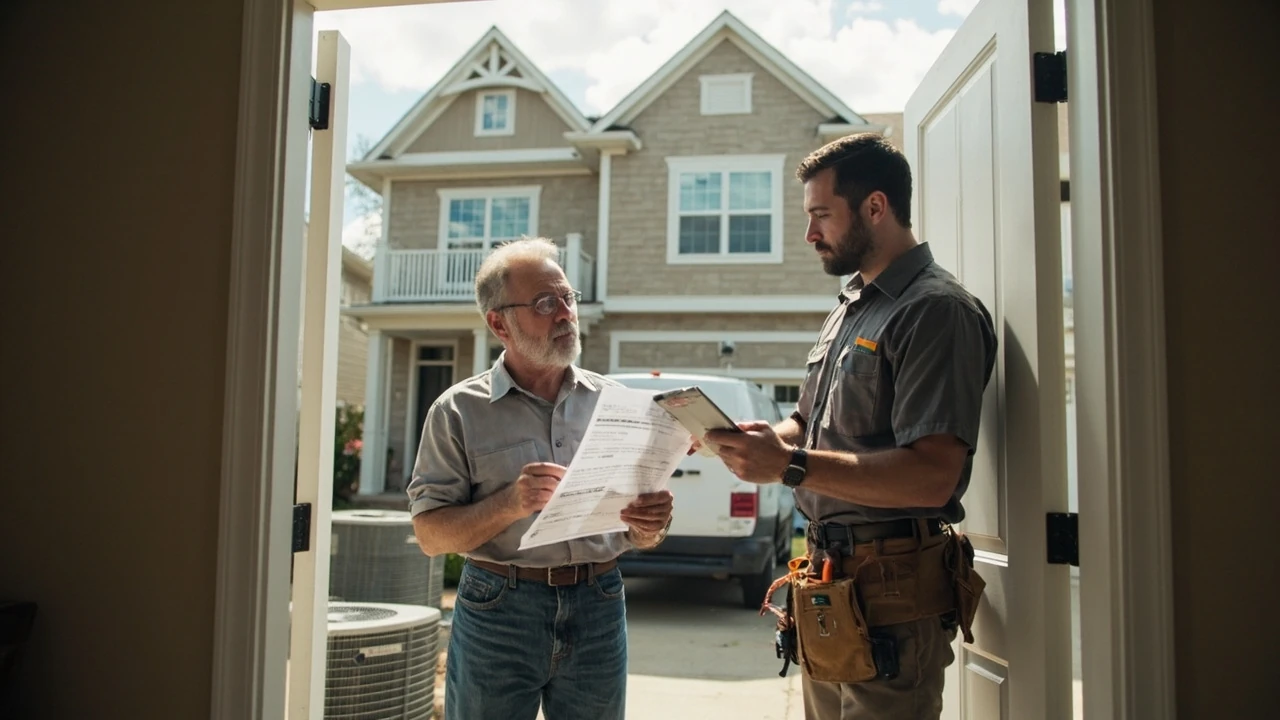
How to choose an hvac contractor you can actually trust
Your heating and cooling system is the single most expensive mechanical equipment most homeowners ever own, and the person you let install, tune, or repair it has more influence over your comfort, energy bills, and indoor air quality than the brand sticker on the outdoor unit. A good hvac contractor can make a mediocre system feel great for two decades; a careless one can shorten equipment life, inflate utility costs, and leave you with warranty disputes when something goes wrong. The hard part is that most homeowners only hire one every ten or fifteen years, which means the learning curve is steep every time.
This guide walks through the practical decisions that separate a reliable hvac contractor from a risky one. It focuses on the parts you can verify yourself: licensing, insurance, system sizing, written estimates, and the small behavioral details that predict how a company will treat you after the truck pulls away. It is written for residential heating and cooling work in the United States, where licensing rules and energy standards vary by state, so the emphasis is on questions and documentation rather than a single legal checklist.
What an hvac contractor actually does
The phrase covers more ground than most homeowners realize. An hvac contractor designs, installs, repairs, and maintains systems that control temperature, humidity, and air quality inside a building. The work spans gas and electric furnaces, central air conditioners, heat pumps, ductwork, thermostats, air handlers, indoor air quality products, and the controls that tie everything together. Some companies focus on one piece of that puzzle; others handle the full system.
Day to day, an hvac contractor’s job breaks into four overlapping roles:
- Sales and design. They evaluate a home, ask about comfort complaints, measure or model the load, and recommend a system that matches the building and the budget.
- Installation. They remove old equipment, set the new unit, modify or build ductwork, connect refrigerant lines, wire controls, and commission the system so it runs at the manufacturer’s specifications.
- Service and repair. They diagnose failures, replace parts, recharge refrigerant where appropriate, and restore safe operation for gas-fired equipment.
- Maintenance. They perform seasonal tune-ups, clean coils, check combustion, test safety controls, and catch small problems before they become system failures.
Because the roles are so different, the right hvac contractor for a quick capacitor swap is not always the right one to design a full system replacement. Understanding which role you need is the first step in choosing well.
Where licensing and certification actually matter
Licensing in the U.S. is a patchwork. Some states license individual technicians, some license the contracting company, and some rely on local jurisdictions to handle it. Federal law does not require a license to work on residential HVAC equipment, so the burden falls on you to check what applies in your area. The strongest signals are not always the most obvious ones.
State and local contractor licenses
Many states require a general contractor’s license for any work above a certain dollar threshold, and HVAC often falls under that rule. California, Florida, and Texas are well-known examples, but the list changes frequently. Even states without a statewide license usually have local building permits that require a licensed company for new installations. A reputable hvac contractor will know the rules in your city and county and will offer to pull the permit when the job calls for one.
EPA Section 608 certification
Anyone who opens a refrigerant circuit or charges a system with refrigerants like R-410A or R-454B must hold an EPA Section 608 certification. This is a federal requirement, not a state one. Ask for the technician’s certification card before any work on the refrigerant side of the system. The certification type should match the equipment: Type I for small appliances, Type II for high-pressure systems, Type III for low-pressure systems, and Universal for all of them.
NATE certification
NATE (North American Technician Excellence) is the largest non-profit certification program for HVAC technicians. It is not legally required, but a NATE-certified technician has passed a proctored exam on either installation, service, or senior-level HVAC work. Companies that invest in NATE certification tend to invest in training overall, which is a useful proxy for quality.
Manufacturer certifications
Most major equipment brands run their own contractor programs. Carrier, Trane, Lennox, Rheem, and Daikin all maintain networks of “factory authorized” dealers who have completed brand-specific training. Being factory authorized usually means the company can offer extended warranty coverage that non-authorized installers cannot, which is one of the more practical benefits of choosing a brand-aligned installer.
The credentials worth asking for before you sign
Before any work begins, an hvac contractor should be able to produce a small stack of documents without hesitation. If they cannot, treat it as a red flag rather than a clerical problem.
| Document | What it confirms | How to verify it |
|---|---|---|
| State or local contractor license | Legal authorization to perform the work in your jurisdiction | State licensing board website or city building department |
| General liability insurance | Coverage for property damage caused by the crew | Certificate of insurance sent directly from the insurer |
| Workers’ compensation insurance | Coverage for injuries to workers on your property | Certificate of insurance; required in most states for employees |
| EPA Section 608 certification | Legal authority to handle refrigerants | Photo of current technician card |
| Manufacturer authorization | Brand-specific training and access to extended warranties | Brand dealer locator on the manufacturer’s website |
| Bond (where required) | Financial protection if the contractor fails to complete the job | Local building department records |
Ask the company to email certificates of insurance directly from their carrier so you know the policies are still in force. A surprising number of contractors carry policies that have lapsed or never existed in the first place.
How an hvac contractor should size your system
Sizing is the single most consequential decision in a new system installation, and it is also the one homeowners are least equipped to evaluate. An oversized air conditioner short-cycles, leaves humidity inside the house, and wears out the compressor early. An undersized one runs constantly, never quite reaches setpoint on hot afternoons, and drives utility bills up. Furnaces and heat pumps have similar problems in reverse.
Manual J is the residential load calculation standard recognized across the industry. A thorough hvac contractor will perform a Manual J calculation for replacement work, not just match the old unit’s nameplate. The calculation accounts for square footage, ceiling height, insulation levels, window area and orientation, airtightness, duct leakage, and local climate data. Done properly, it takes an hour or more and may include a blower door test or duct leakage test.
What to expect in a proper load calculation
- A walk-through of the home to inventory windows, doors, insulation, and existing ductwork
- Measurements of wall, ceiling, and floor areas, not just a square-foot rule of thumb
- Orientation notes for each exterior wall and window
- Local design temperature data from ASHRAE or a weather service
- An itemized load summary in BTUs, broken down by room or zone
- A clear recommendation with the reasoning behind the chosen equipment size
If an hvac contractor quotes a system size based on a phone call, a square-foot estimate, or a quick glance at the old unit, ask for the load calculation before agreeing to anything. The right answer is sometimes smaller than the existing system, which is not what a commission-driven salesperson wants to hear.
Reading a written estimate the right way
A vague quote is one of the most common ways homeowners get stuck with surprises. A useful estimate from an hvac contractor is itemized, specific, and easy to compare against other bids. The cheapest number on paper is rarely the cheapest job in practice.
| Line item | What it should include | Why it matters |
|---|---|---|
| Equipment model numbers | Specific indoor and outdoor unit model and serial numbers | Makes substitutions and warranty claims straightforward |
| SEER2, HSPF2, and AFUE ratings | Efficiency ratings under current federal testing standards | Determines utility savings and eligibility for rebates |
| Warranty terms | Parts, compressor, and labor coverage for both equipment and installation | Surfaces disputes years later when a component fails |
| Refrigerant line set | New or reused, length, insulation, and leak testing method | Reused line sets are a common source of early failures |
| Ductwork modifications | New runs, resizing, sealing, and insulation specifications | The largest variable cost in many changeouts |
| Electrical work | Disconnect, whip, breaker size, and any panel upgrades | Hidden if not itemized; required for permit work |
| Permits and inspections | Who pulls the permit and what inspections are scheduled | Unpermitted work complicates insurance claims and home sales |
| Removal and disposal | Old equipment haul-away and refrigerant recovery | EPA-compliant refrigerant recovery is legally required |
| Labor and timeline | Estimated duration, crew size, and start date | Sets expectations and helps compare bids |
Estimates that lump everything into a single number or that hide equipment model numbers behind phrases like “16 SEER system” deserve a second look. A clear hvac contractor will write everything down and will not pressure you to sign before you have had a chance to compare.
Questions to ask before you sign the contract
How an hvac contractor answers is often more revealing than what is on the estimate. The questions below are designed to surface the topics that matter but rarely make it into a sales conversation.
- Who will be on site, and what is each person’s role? Subcontracted labor is common; you should know who is actually doing the work.
- Will you perform a Manual J load calculation before recommending equipment? If not, why?
- What is the total installed cost, and what specifically is excluded?
- Which permits are required, and who is responsible for pulling them?
- What happens if the equipment fails during the warranty period: parts only, or parts and labor?
- Do you subcontract ductwork, electrical, or crane work, and are those subs also licensed and insured?
- What is the payment schedule, and when is the final payment due?
- How is change order pricing handled when the existing ductwork or electrical is worse than expected?
- What is included in the first-year maintenance visit, if any?
- Can you provide three recent local references for similar work?
Independent national directories, like the ACCA contractor locator, can help you find member companies that have committed to industry standards, and many of those directories also let you filter by specialty and service area. Treat any list as a starting point rather than a final answer; the contractor’s own track record in your home will always matter more than a logo on a web page.
Strong answers are direct and specific. Vague answers, defensive reactions, or pressure to skip steps are all signals worth taking seriously.
Red flags that outweigh any discount
It is tempting to chase the lowest price on a four-figure job, but a few patterns reliably predict trouble. Watch for these warning signs when evaluating an hvac contractor:
- Door-to-door solicitation after a storm or heat wave, especially with offers to “inspect” equipment for free
- Quotes given without anyone entering the attic, crawlspace, or mechanical room
- Cash discounts, large upfront deposits above about a third of the job, or full payment before work begins
- Refusal to provide license numbers, insurance certificates, or written warranties
- Equipment model numbers that do not match anything on the manufacturer’s website
- Pressure to sign “today only” deals or to lock in rebates that you have not independently verified
- No local address, no local references, and no online presence beyond paid advertising
- Refusal to pull permits for work that clearly requires them
None of these are disqualifying on their own, but two or three together usually mean the savings on the estimate will be spent fixing the work within a year.
What a good installation day actually looks like
Knowing what a well-run installation looks like helps you judge whether the crew is doing the job right. The sequence is fairly consistent across reputable companies.
- Walk-through and confirmation. The lead technician reviews the scope, confirms equipment placement, and protects floors and furnishings before any work begins.
- Safe removal. Old equipment is disconnected, refrigerant is recovered by an EPA-certified technician, and the old unit is set aside for proper disposal.
- Preparation. The new pad or mounting platform is set, line set penetrations are drilled, and any duct modifications are completed before the new equipment arrives at the pad.
- Set and connect. The indoor coil, air handler or furnace, and outdoor unit are placed, leveled, and connected. Refrigerant lines are nitrogen-pressure-tested if they are new.
- Electrical and controls. Low-voltage wiring is run to the thermostat, line voltage is connected at the disconnect, and any safety devices are wired in.
- Commissioning. The system is evacuated, charged by weight or superheat/subcooling, and started. Airflow is measured, temperature split is checked, and combustion analysis is run on gas equipment.
- Documentation. The crew walks you through the startup readings, registers the warranty, and provides a copy of the commissioning sheet.
Commissioning is the part most homeowners never see and the part that separates a careful hvac contractor from a rushed one. If the company cannot show you temperature split, static pressure, and combustion numbers, ask why.
Service, repair, and ongoing maintenance
Even the best-installed system needs regular care. A maintenance visit from an hvac contractor typically covers the coils, blower assembly, drain pan and condensate lines, filter replacement, electrical connections, and a safety check on gas-fired equipment. Most manufacturers require proof of annual maintenance to keep the parts warranty valid, so this is not just a comfort issue.
Repair work has its own decision points. A good technician will explain the failure, the options, and the cost before starting the work, and will provide a written invoice that lists parts, labor, and any diagnostic fee separately. For systems over ten years old, it often makes sense to ask whether a major repair is worth the investment or whether the money is better put toward a planned replacement.
How to compare bids without losing your mind
Most homeowners get two or three estimates, then stare at numbers that look nothing alike. The right way to compare is to normalize the bids by equipment, scope, and warranty, not by the bottom line.
| Comparison axis | What to align across bids | Why it changes the answer |
|---|---|---|
| Equipment | Same brand, model, and efficiency rating | Different SEER2 or HSPF2 ratings change both price and operating cost |
| Scope | Same line set, ductwork, electrical, and permit assumptions | Hidden exclusions are the most common reason bids diverge |
| Warranty | Parts, labor, and registration terms | A ten-year parts warranty with no labor coverage is much weaker than it sounds |
| Timeline | Start date, duration, and crew size | A faster timeline is not always cheaper; it sometimes means fewer crew members or skipped steps |
| Rebates and tax credits | Utility rebates, federal tax credits, and manufacturer promotions | Two bids can land at the same price after incentives even if the pre-incentive totals differ |
Once the bids are normalized, the cheapest responsible hvac contractor is usually the best value. The most expensive is not automatically the best, and the lowest bid deserves scrutiny rather than celebration.
The role of rebates, tax credits, and financing
Federal and utility incentives change often, and a knowledgeable hvac contractor will help you sort through what actually applies to your project. As of recent years, qualifying heat pumps and high-efficiency air conditioners have been eligible for federal tax credits under the Inflation Reduction Act, and many utilities offer rebates for high-efficiency equipment, smart thermostats, and duct sealing. Manufacturer promotions come and go by season.
Two cautions. First, confirm rebate eligibility directly with the utility or the program administrator before counting the money; contractors sometimes reference rebates that have expired or that apply to a different model. Second, if the company offers in-house financing, read the terms carefully and compare the annual percentage rate against a home equity line or a personal loan. Promotional “same as cash” offers frequently back-charge interest from day one if the balance is not paid off by the deadline.
Working with an hvac contractor on a remodel
Remodels are where system design and contractor coordination matter most. If you are adding square footage, finishing a basement, or gutting a kitchen, the hvac contractor should be involved before drywall goes up. Relocating a return air drop, adding a supply run, or upsizing a return duct is far cheaper before the ceiling is closed than after.
For renovations that touch the attic or exterior walls, ask the hvac contractor to confirm that insulation and air sealing have not been disturbed. A common post-renovation problem is a new system that performs below expectations because the renovation removed insulation from the attic floor or created bypasses for outdoor air. A quick blower door test before the project closes can catch this kind of issue while it is still easy to fix.
Common scams and how to spot them
Residential HVAC work is a frequent target for short-term scams, especially after severe weather. The patterns change, but the underlying tactics do not.
- Storm-chasing crews. They arrive after a regional event, quote on the spot, take a deposit, and disappear before the work is done or the warranty matters.
- Refrigerant top-offs without diagnosis. Adding refrigerant without finding the leak is illegal under EPA rules and is never a long-term fix. The correct answer is a leak search and a proper repair.
- Unnecessary full-system replacements. A working system may need a part, a cleaning, or a capacitor. Replacing it because “it is old” is a judgment call, not a technical one.
- Indoor air quality upsells that do not match the home. UV lights and advanced filtration can be useful, but they only make sense if the home has the duct leakage, humidity, and filtration baseline to support them.
- Fake “government programs” that reduce the cost of new equipment. Federal and utility programs do not require on-the-spot payment, do not pressure homeowners to sign contracts in their living room, and do not chase residents door to door.
When in doubt, take the offer in writing and give yourself 24 hours to verify it before signing anything. Legitimate companies do not object to that pause.
What to do if a job goes wrong
Even with a careful selection, disputes happen. The first step is documentation. Keep the contract, the estimate, all change orders, photos of the work in progress, and the commissioning report. Send concerns in writing, even if you also call, so there is a record. Most reputable contractors will return to fix legitimate issues at no charge during the warranty period.
If the contractor is unresponsive, the next steps depend on where you live and the nature of the work. State contractor licensing boards can investigate license violations. The Better Business Bureau and local trade associations sometimes mediate. For unpermitted work, your local building department can require corrections. The last resort is small claims court, which is most useful for amounts that are large enough to matter but small enough to avoid full litigation.
Building a long-term relationship with one company
Most homeowners do not think of their hvac contractor as a long-term relationship, but the companies that provide the best service tend to be the ones that know the home. A contractor who has serviced your furnace for five years will recognize a strange noise faster than a stranger, and will have records of past repairs, parts, and readings that make new diagnoses easier. Choosing a company with a real local presence, a stable crew, and a service department rather than just an installation sales team tends to pay off over the life of the system.
Frequently asked questions
How much does a typical residential hvac contractor charge?
Costs vary widely by region, system size, and scope of work. A full system replacement in a single-family home often falls in a broad range that depends on equipment efficiency, ductwork changes, and local labor rates. The best way to get a real number for your project is to collect at least three itemized bids from licensed local companies.
Do I need a permit to replace my furnace or air conditioner?
In most jurisdictions, a permit is required for any HVAC replacement that involves new electrical circuits, gas line work, or duct modifications. An hvac contractor who suggests skipping the permit is usually asking you to accept unpermitted work, which can cause problems with insurance claims and home sales later.
How long should a new HVAC system last?
A well-sized and properly installed system typically lasts fifteen to twenty years for furnaces and twelve to eighteen years for air conditioners and heat pumps, depending on usage, climate, and maintenance. Annual maintenance, prompt repairs, and clean filters extend that range noticeably.
Should I replace the furnace and air conditioner at the same time?
When both are nearing the end of their useful life, replacing them together is usually more efficient because the indoor coil, line set, and controls can be matched. If only one is failing, it is often more economical to replace just the failed component and keep the working equipment. Your hvac contractor can model both options on the same estimate.
What is the difference between a heat pump and a traditional AC unit?
A traditional air conditioner cools only, while a heat pump reverses its refrigeration cycle to provide both cooling and heating. In moderate climates, a heat pump can replace a furnace and air conditioner entirely. In colder regions, a heat pump is often paired with a gas furnace in a dual-fuel system.
How often should I schedule maintenance?
Most manufacturers and hvac contractors recommend two visits per year: one in the spring for cooling and one in the fall for heating. Even one annual visit is meaningfully better than none, especially for keeping the warranty valid.
Is it worth buying an extended labor warranty?
It depends on the equipment, the labor rate in your area, and how long you plan to stay in the home. Extended labor coverage typically runs a few hundred dollars per year and can pay for itself if a major component like a compressor fails outside the standard parts warranty but inside the coverage window.
What should I do if my hvac contractor is not returning calls?
Send a written request describing the issue and asking for a specific response date. If there is still no response, contact the state or local licensing board, file a complaint with the Better Business Bureau, and consider whether the work is covered by a bond. Documentation from the original project is critical at this stage.
Can an hvac contractor handle indoor air quality issues?
Yes, many handle humidity control, filtration upgrades, UV lights, and fresh air ventilation. The right solution depends on the underlying problem, so start with a measurement rather than a product. A contractor who sells equipment before measuring humidity, particulates, or carbon dioxide is guessing.
How do I know if a quote is too good to be true?
Compare it against two or three itemized bids from licensed local companies. If the outlier is dramatically lower, the missing line items are usually where the difference is hiding: permit fees, line set replacement, code-required upgrades, or warranty terms that are not what they seem.




Leave a Reply