
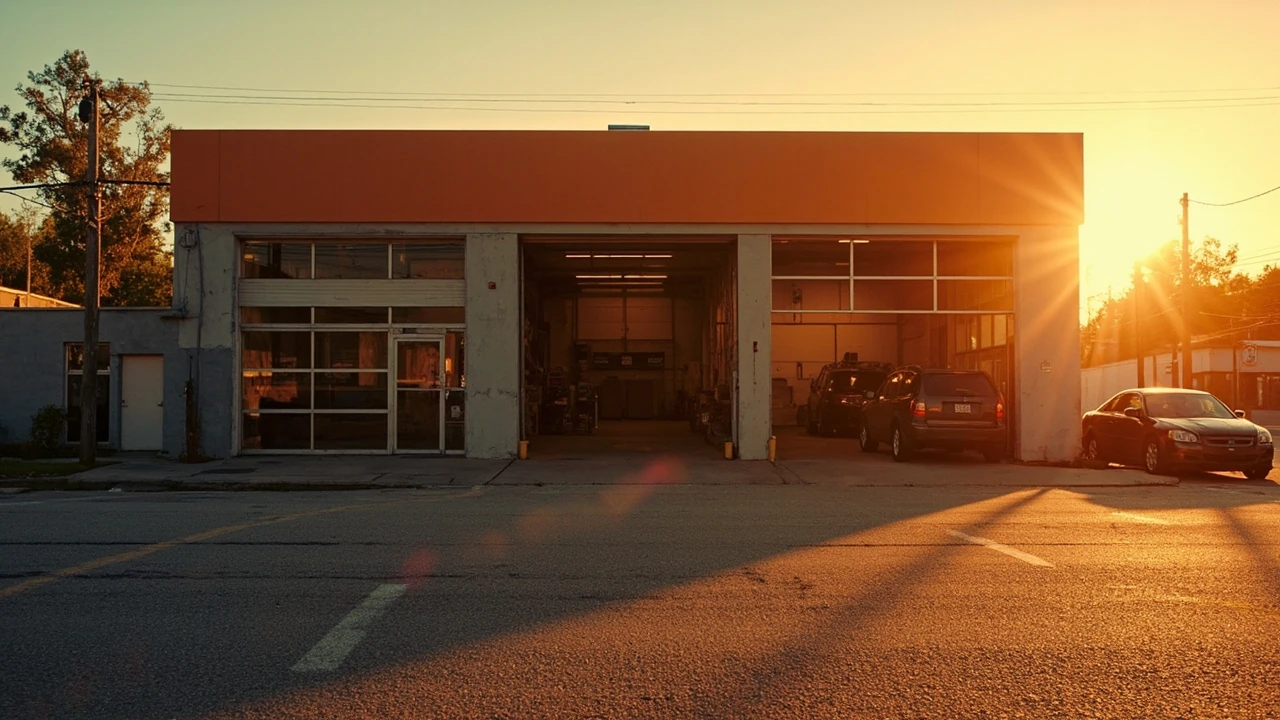
Firestone locations: how to find the right store near you
You pull into a parking lot with a soft tire warning, a brake noise that won’t quit, or a sudden vibration on the highway, and the first practical question is where to take the car. For many drivers in the United States, that question leads to Firestone locations. The brand runs hundreds of service centers across the country, and it also works with independent dealers who display the same name. Knowing how those stores are organized, what they actually do, and how to compare them makes a routine visit much easier to plan.
Firestone is one of the older American tire brands. The company was founded in Akron, Ohio, in 1900 by Harvey S. Firestone, and it has gone through several ownership changes since then. Today the brand is part of Bridgestone Americas, which means many of its stores share parent-company standards with Bridgestone while still operating under the familiar Firestone name. That history matters when you compare stores, because it shapes which tire lines, warranties, and service programs a given shop can offer.
This guide walks through how to find Firestone locations, what to expect once you arrive, and how to decide which store is the right one for a specific job. The goal is practical: fewer surprises at the counter, a clearer sense of cost, and a better result from the visit.
What counts as a Firestone location today
When people search for Firestone locations, they usually mean a place where they can buy Firestone-brand tires, get them installed, and book common maintenance such as brakes, alignments, and oil changes. The network is broader than that one description suggests, because the brand is sold and serviced through more than one channel.
Company-owned service centers
Firestone Complete Auto Care stores are operated directly by Bridgestone Retail Operations, the same group that runs Tire Plus and Wheel Works in some markets. These shops follow company standards for staffing, training, equipment, and customer programs. Because they are company-owned, they generally offer the full menu of advertised services and the longest list of promotional pricing, including the brand’s tire rebate offers when those are active.
Franchised and independent dealers
Many Firestone locations are independently owned and licensed to sell the brand. A neighborhood tire shop can carry the Firestone name even though it is not part of Bridgestone’s corporate store list. Independent dealers set their own pricing, decide which services to bundle, and may or may not honor the same national promotions. The advantage is usually convenience: a dealer may be closer to home, open at different hours, or willing to handle a vehicle that a larger store is not set up for.
Tire-and-service hybrids inside larger retailers
In some cities, Firestone-branded service counters operate inside other retail environments, such as host stores or auto malls. These are still legitimate Firestone locations, but the parent operator may be a third party. The product mix and pricing typically match the host store’s conventions.
The mix of channels is one reason two Firestone locations in the same zip code can quote different prices for the same tire. Ownership and operating model drive that, not the brand on the sign.
Services you can expect at most Firestone locations
The service menu varies by location, but a few categories are consistent enough to plan around. The list below covers the work most stores perform on a daily basis. It is worth confirming the specific services at your store before you book, because smaller dealers sometimes refer specialty jobs elsewhere.
- Tire sales and installation, including mounting, balancing, valve stems, and old-tire disposal.
- Tire repair for punctures in the tread area, with plug-and-patch methods on a case-by-case basis.
- Wheel alignment, including two-wheel and four-wheel adjustments on cars and light trucks.
- Brake service, from pad replacement to rotor resurfacing and full caliper work.
- Oil and filter changes using conventional, synthetic blend, and full synthetic grades.
- Battery testing, replacement, and electrical system checks.
- Suspension inspection, including shocks, struts, and steering components.
- Scheduled maintenance aligned with manufacturer service intervals.
- Air conditioning service, including refrigerant recovery and recharge.
- Exhaust and catalytic converter inspection on vehicles the shop is equipped for.
For a home-services audience, the practical takeaway is that Firestone locations can handle most light mechanical and tire work in one stop. They are not set up for major transmission rebuilds, engine overhauls, or collision repair, and a good store will tell you that up front rather than take the job and stall on it.
How to find Firestone locations near you
The fastest path to a useful list is the brand’s official store locator, which sorts by distance, hours, and services. Beyond that, a few practical filters help narrow the results to stores that actually fit your situation.
Filtering by distance and travel time
Distance is a useful first filter, but travel time matters more in dense cities. A store five miles away on a slow arterial road can take longer to reach than one ten miles away on a highway. Most locator tools now show travel time directly, and that is usually the better number to trust.
Filtering by services
Locator results often include a service menu for each store. If you need a specific job such as a computer alignment, a diesel-exhaust service, or a commercial-tire installation, the menu filter saves a wasted trip. Stores that do not offer the service will not show up in the filtered list, and the ones that remain will have the equipment and training listed.
Filtering by hours and appointment availability
Many Firestone locations now publish real-time appointment slots. Same-day tire installation is common during the week, while weekend slots can fill up quickly, especially during spring and fall when drivers swap between seasonal tires. If you can be flexible, an early-morning weekday slot is usually the quietest time to visit.
Confirming the address with a phone call
Even when the locator is current, a quick call confirms three useful things: that the address is correct, that the specific tire size or service you need is in stock or on the schedule, and whether walk-ins are accepted for that day. This step is especially important in new developments or shopping centers where street numbering and entrance layout can be confusing on a first visit.
Comparing store types at a glance
The table below summarizes how the main kinds of Firestone locations tend to differ. Use it as a starting point and confirm details with the specific store before booking.
| Store type | Ownership | Tire line availability | Typical pricing | Service menu | Best for |
|---|---|---|---|---|---|
| Firestone Complete Auto Care | Company-owned, part of Bridgestone Retail Operations | Full Firestone line plus Bridgestone and associate brands | List pricing with frequent national promotions | Full menu: tires, alignment, brakes, oil, batteries, suspension, A/C | Standard tire replacement and routine maintenance in a familiar setting |
| Independent Firestone dealer | Locally owned, brand-licensed | Most Firestone lines; some Bridgestone products | Owner-set, often competitive with company stores | Core services; specialty work may be referred out | Convenient neighborhood service and personal relationships |
| Host-store or auto-mall counter | Third-party operator under license | Selected Firestone lines based on host agreement | Aligned with host store’s pricing model | Tire-focused, with light mechanical work in many cases | One-stop shopping with another retail errand |
| Commercial-tire focused location | Company-owned or independent with commercial agreements | Commercial Firestone lines plus Bridgestone commercial products | Account-based or per-vehicle pricing | Commercial tires, fleet service, road service calls | Light truck, work van, and small fleet vehicles |
Planning a visit: what to bring and what to ask
Once you have picked a store, a small amount of preparation makes the visit shorter and the result more predictable. Most Firestone locations run on a similar intake process: vehicle in, quick check, written estimate, then work with your approval.
Documents and vehicle information to have ready
Bring your vehicle registration or at least know the year, make, model, trim, and current tire size. The tire size is printed on the sidewall of the current tire, and it is also in the owner’s manual or on the driver-side door placard. If you have a maintenance log, that helps the advisor spot upcoming services. For warranty or rebate work, the original purchase receipt and the tire’s DOT date code are useful if a question comes up.
Questions worth asking at the counter
A short, focused list of questions tends to produce better answers than a long, open-ended one. The list below covers the points that matter most when you are choosing between tire lines, paying for service, or scheduling a follow-up.
- What is the out-the-door price for the tire size I need, including mounting, balancing, valves, disposal, and any applicable taxes?
- Which tire line fits my typical driving, and what is the difference in tread-life warranty between the lines I am considering?
- Is the quoted price a cash price, a card price, or contingent on a current promotion I should ask about?
- What is the labor warranty on the work being performed, and is it written on the invoice?
- Are there any manufacturer recalls or service bulletins that apply to my vehicle, and do you handle the paperwork if so?
- How long will the vehicle be in the shop, and is a loaner, shuttle, or wait area available?
- What does the alignment printout show, and what numbers are still within spec versus out of spec?
- Are there any services you would recommend bundling now to save a future visit, and what do they cost individually?
Asking for an itemized estimate in writing is the single most useful habit when dealing with any auto service. It keeps the conversation focused on the work and prevents scope creep while the vehicle is on the lift.
Cost expectations at Firestone locations
National chains do not publish uniform price lists because tire prices move with manufacturer costs, promotions, and local market conditions. The numbers below are ranges drawn from typical industry experience and are meant to help you set expectations, not to act as a quote.
| Service category | Typical range per vehicle | Variables that change the price |
|---|---|---|
| Passenger tire installation (per tire) | Modest base fee per tire, with the tire itself priced separately | Tire line, size, speed rating, road-hazard coverage, valve type |
| Four-wheel alignment | Mid-range adjustment versus a premium alignment package | Vehicle type, adjustable rear suspension, lift kits, ADAS recalibration |
| Front brake pads and rotors | Varies widely by vehicle and parts choice | Pad compound, rotor brand, caliper hardware, electronic parking brake |
| Oil change (conventional to full synthetic) | Modest for conventional, higher for full synthetic | Oil grade, filter type, capacity, coupon availability |
| Battery replacement | Depends on group size and cold-cranking amps | AGM versus flooded, vehicle registration requirements, core charge |
Promotional pricing is a major factor in what you actually pay. Tire rebates, seasonal buy-three-get-one offers, and bundled service discounts can change the math by a meaningful percentage. The catch is that promotions usually require a specific tire line, a specific service package, or a specific payment method. Read the fine print before assuming the advertised price is what you will pay at the register.
How Firestone locations handle warranties and follow-up
The brand’s tire warranties run through the tire manufacturer, not the individual store. That distinction matters when something goes wrong, because the store handles the inspection and the paperwork, but the warranty decision is made against the manufacturer’s tread-life and uniformity terms.
Tread-life warranty claims
If a tire wears out before its stated mileage warranty and the wear pattern is even across the tread, the manufacturer will typically prorate a credit toward a replacement. The credit is based on the remaining tread depth versus the original, and it is applied to the suggested retail price at the time of the claim, not the price you originally paid. Firestone locations measure the tread, document the wear, and submit the claim on your behalf.
Workmanship and road-hazard coverage
Service work such as mounting, balancing, and alignments is covered by a separate workmanship warranty, the length of which is set by the store or the parent company. Road-hazard coverage is a separate purchase that protects a tire against impact damage from potholes, nails, or glass. The store can usually add it at the point of sale, and the certificate explains what is covered and what is excluded.
Recalls and manufacturer service actions
Firestone has had several notable recall campaigns over the company’s history, including the well-documented 2000s-era recall related to tire failures on certain light-truck tires. The official history of the company, including ownership changes and major product milestones, is documented on the Firestone company Wikipedia page, which is a useful background reference for understanding the brand’s record.
Current recall status on a specific tire is best checked by the DOT tire identification number on the sidewall. The store can run that number against the National Highway Traffic Safety Administration database, and the same check is available online through NHTSA’s recall lookup tool, which is maintained by the federal agency responsible for vehicle safety.
Special cases worth planning around
Most visits to Firestone locations are routine, but a few situations deserve extra thought because they affect the right store, the right appointment, and the right way to document the work.
All-wheel-drive and four-wheel-drive vehicles
Replacing tires on an AWD or 4WD vehicle often requires replacing all four tires at the same time, or at minimum matching the new tires to the existing ones within a tight tread-depth range. Mismatched tires on an AWD vehicle can cause drivetrain damage and will void some warranties. Confirm with the store that the tires being installed are appropriate for the vehicle’s drivetrain and that any required reprogramming or recalibration is included in the estimate.
Vehicles with advanced driver-assistance systems
Cars with adaptive cruise control, lane keeping, or automatic emergency braking often need a camera or radar recalibration after a wheel alignment, windshield replacement, or suspension change. The cost and the equipment required vary by manufacturer, and not every location is set up to do it in-house. Ask whether the store handles ADAS calibration on your specific model and whether the cost is included in the alignment estimate or quoted separately.
Run-flat and low-profile tires
Run-flat tires have specific mounting and dismounting procedures, and the equipment and training required is not universal. Low-profile tires with large-diameter wheels can also be more difficult to mount without damage. If your vehicle uses either of these, confirm the store’s experience with the specific tire before booking.
Seasonal tire changeovers
In regions with winter tire requirements or strong seasonal preferences, Firestone locations often run changeover events in spring and fall. Storing a set of seasonal tires at the store is sometimes an option, either on-site or through a third-party partner. Storage fees and storage terms vary, so ask for the agreement in writing if you plan to leave tires behind.
When a Firestone location may not be the right choice
Brand familiarity is useful, but it is not a reason to default to any single chain. A few situations call for a different shop, and recognizing them up front saves time.
- Specialty performance or track-day tires are often handled better by a dedicated performance-tire shop with the right mounting equipment and alignment rigs.
- Major collision repair, paintwork, and frame straightening are outside the typical Firestone service menu and need a body shop.
- Hybrid and electric vehicle high-voltage system work, including battery-pack service, requires a shop with the relevant training and certifications.
- Heavy-duty commercial trucks above a certain weight class are usually handled by dedicated commercial-tire networks rather than consumer-focused locations.
- European vehicles with model-specific quirks sometimes benefit from a dealer or a specialist familiar with that brand, especially for warranty-covered repairs.
The same logic applies in reverse: a Firestone location is often a strong choice for routine work because the volume keeps pricing competitive, the equipment is current, and the training programs are standardized across the network.
Frequently asked questions
How many Firestone locations are there in the United States?
The network includes both company-owned Firestone Complete Auto Care stores and independently owned dealers. The combined footprint runs into the low thousands of locations across the country, with the heaviest concentration in the South, Midwest, and large metro areas in the West.
Do all Firestone locations sell the same tires?
Most carry the main Firestone tire lines, but specific sizes and specialty products can vary. Independent dealers in particular may stock a narrower selection and order on request, while larger company-owned stores often have a wider range on hand.
Can I book an appointment at any Firestone location?
Most stores offer online appointment scheduling through the brand’s website, and many also accept calls and walk-ins for tire work. Specialty services such as ADAS calibration or commercial-tire installation may require a call rather than an online booking.
Do Firestone locations price-match competitors?
Pricing policies vary by store and by region. Company-owned stores run frequent promotions that change the effective price on a weekly basis, while independent dealers set their own. Asking for a written quote and comparing it to a competitor’s quote is the most reliable way to evaluate value.
What forms of payment do Firestone locations accept?
Major credit cards, debit cards, and cash are standard. Some promotions are contingent on a specific payment method, such as a branded credit card or a particular card network, so it is worth checking the current terms before paying.
Can Firestone locations service a vehicle that is still under the manufacturer’s warranty?
For routine maintenance such as oil changes, tire replacement, and brake work, yes. Following the manufacturer’s maintenance schedule and keeping the receipts is what protects the warranty, not the choice of shop. Powertrain warranty repairs typically need to go through the vehicle’s franchised dealer.
What happens to my old tires when I get new ones?
Most Firestone locations include old-tire disposal in the installation price. The tires are collected by a recycling vendor and are generally processed into crumb rubber, tire-derived fuel, or civil-engineering applications such as playground surfaces and rubberized asphalt.
Are Firestone locations open on Sundays?
Many are, but hours vary by store and by region. The brand’s store locator shows current hours for each location, and that is the most accurate source for a specific store on a specific day.
Do Firestone locations offer road-side assistance or mobile service?
Some commercial-focused locations offer mobile service for fleet accounts. Consumer road-side assistance is typically handled through a third-party provider attached to a warranty or a credit-card benefit rather than the store itself.
What should I do if I have a problem after a service visit?
Start with the store manager at the location that performed the work, and ask for the issue to be documented in writing. If the matter is not resolved, escalate to the parent company’s customer-care line, and keep copies of the estimate, the invoice, and any photos that show the problem.
Putting it together: a short checklist before you go
Plan around three concrete steps rather than a long list of considerations. First, use the brand’s locator with the right filters to identify two or three Firestone locations that match your job, your vehicle, and your schedule. Second, call the most convenient store with your tire size or service need in hand and confirm price, parts availability, and timing. Third, bring your registration, your maintenance log if you have one, and a written estimate request to the visit so the conversation stays focused on the work you actually need.
If a Firestone location is the right fit, the visit is usually quick, the pricing is transparent once you have the written estimate, and the work is backed by both the manufacturer’s warranty on the parts and a separate workmanship warranty on the labor. If it is not the right fit, the same call that confirmed the appointment can refer you to a specialist, and you will have lost only a few minutes rather than a full afternoon in the shop.


Leave a Reply