
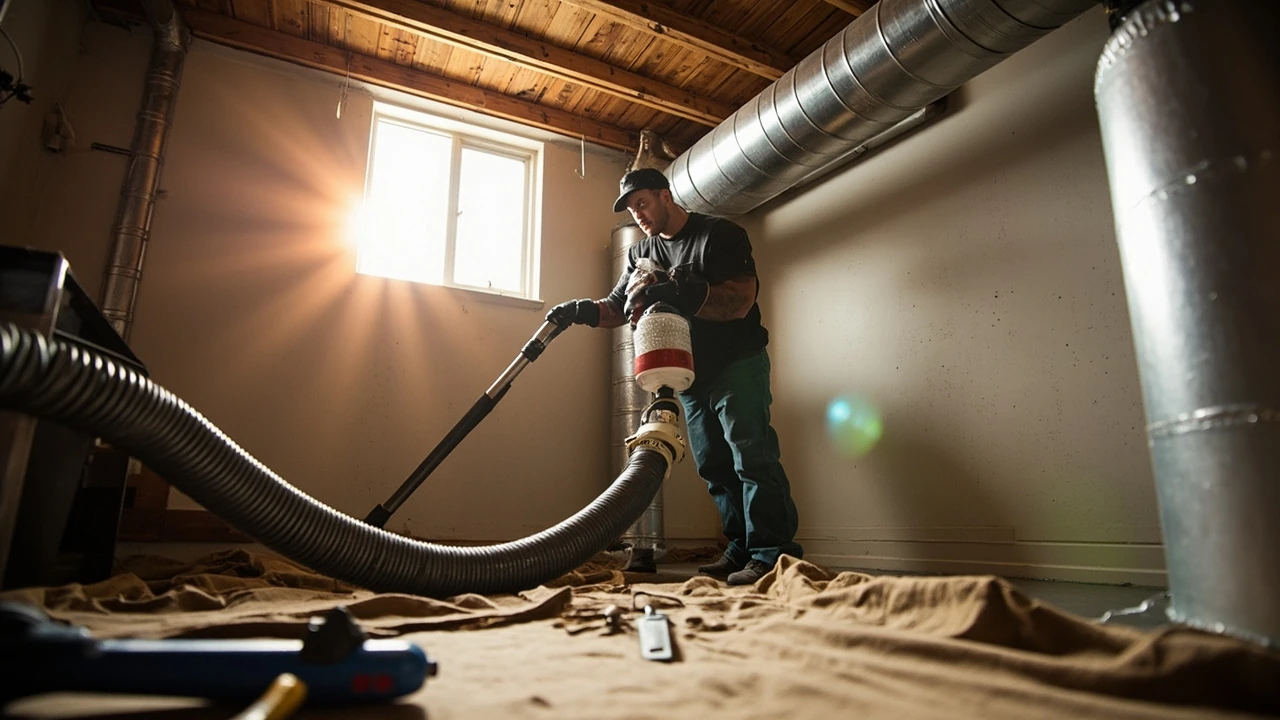
Air duct cleaning dryer vent service: what it actually covers
A combined air duct cleaning dryer vent service addresses two separate but connected systems in a typical home. The air duct side targets the supply and return runs that feed rooms from the furnace or air handler. The dryer vent side targets the single flexible or rigid line that carries hot, moist exhaust from the clothes dryer to the outside wall or roof termination. A technician who handles both in a single visit is usually a NADCA-trained or equivalent provider with a commercial HEPA vacuum, a negative-air containment setup, agitation tools sized to the duct material, and a separate dryer vent cleaning kit with a high-CFM vacuum and a rotating brush or skip-ball.
Why bundle them? The two systems share an airflow problem family and a contamination problem family, and they often sit on the same service truck. A homeowner who notices dust streaking out of supply registers, a musty odor when the fan first kicks on, or a dryer that takes two cycles to dry a normal load is a candidate for both. Pricing, scope, and even some of the equipment overlap, which is why most companies offer them together, sometimes at a small discount versus booking each separately.
This guide walks through what a thorough appointment looks like, what it does not need to include, when it is worth scheduling, and how to tell a careful provider from one who is just selling a coupon.
What an air duct cleaning dryer vent service actually includes
A credible appointment is more than a vacuum run through the main trunk. The duct side and the dryer side each have their own checklist, and a quality provider will explain the steps in plain English before starting.
The duct cleaning side of the visit
- Pre-inspection of the duct system, including a count of supply and return registers, duct material (flex, sheet metal, fiberglass-lined board), and visible condition at the air handler.
- Setting up a HEPA-filtered vacuum at the air handler, the trunk line, or the return plenum to create negative pressure through the system.
- Sealing each supply and return register with a magnetic cover or plastic cap so suction is concentrated on the section being cleaned.
- Agitation of every accessible run with a rotary brush or air whip sized to the duct diameter, working from the register openings back toward the vacuum.
- Cleaning the blower fan, the evaporator coil housing area if accessible, and the interior of the air handler cabinet, since dust bypasses the filter and settles there.
- Optional sanitizer or deodorizer applied as a light mist, only if the homeowner agrees, and only with a product whose safety data sheet is available on request.
- A post-cleaning visual check, ideally with a small inspection camera, of at least the main trunk and the return side to confirm the work.
The dryer vent cleaning side of the visit
- Disconnecting the dryer from the vent line, inspecting the back of the dryer for lint buildup, and pulling the flexible transition hose if present.
- Vacuuming the wall cap or roof termination from the outside, then feeding a rotating brush or a skip-ball through the rigid or semi-rigid duct from the inside out.
- Measuring total vent run length, counting elbows, and confirming the termination damper moves freely and is not crushed or screened in a way that traps lint.
- Reconnecting the dryer with a new short UL-listed transition hose if the existing one is plastic, kinked, or longer than about four feet, since long flex runs are a fire risk on their own.
- Running the dryer for several minutes on a high-heat cycle to confirm airflow at the exterior termination, which should feel like a steady, warm, forceful exhaust.
What a careful provider will not include
A trustworthy technician will not push coil cleaning, duct sanitizing, or seal-coating without explaining why. Coil cleaning is a separate, slower job that often needs to be done on the air handler with a foaming cleaner and a wet/dry vacuum, and only if the coil is visibly fouled. Duct “sealing” with an internal mastic spray is a different service and is only needed if ducts have actual gaps or disconnected sections, not as an upsell. If a quote includes any of these by default, ask for the visual evidence that the work is needed.
Why the two jobs belong together
Air ducts and dryer vents look similar from the outside, but the failure modes are different. Air ducts accumulate dust, pet dander, construction debris, and in some homes, mold growth on fiberglass-lined sections. Dryer vents accumulate lint, which is a combustible organic fiber that builds up fastest at the termination and at every elbow. The homeowner’s reasons for noticing the problem are different too.
Signals that point to the air duct side
- Visible dust streaks or “snakes” coming out of supply registers when the fan is running.
- A musty or stale smell on fan startup, especially after the system has been off for a while.
- A visible gray or brown mat of dust on the return side of the system, often noticed during a filter change.
- Family members with dust allergies or asthma reporting that symptoms improve on vacation and worsen at home.
Signals that point to the dryer vent side
- Clothes coming out of a normal timed cycle still damp, especially the back of the load closest to the drum.
- The dryer drum exterior feeling hotter than usual at the end of a cycle, or a burning-dust smell during drying.
- The exterior vent hood not flapping open when the dryer is running, or only weakly opening.
- Visible lint piled around the wall cap outside, or a hot vent cover you can barely hold a hand against.
When both sets of symptoms show up in the same household, the combined air duct cleaning dryer vent service is the most efficient booking. The technician only sets up once, the HEPA vacuum is already on the truck, and the homeowner pays one trip charge rather than two.
How often an air duct cleaning dryer vent service is actually needed
Frequency depends on household size, pets, renovation history, and how often the dryer runs. There is no universal annual rule, and a provider that insists on a yearly contract for a clean system is selling a subscription more than a service. Use the table below to set a sensible interval and adjust based on what you actually see at the registers and at the dryer vent hood.
| Household condition | Air duct cleaning interval | Dryer vent cleaning interval | Why the vent is usually sooner |
|---|---|---|---|
| Two adults, no pets, no recent renovation | Every 3-5 years | Every 1-2 years | Lint builds regardless of dust, especially with longer vent runs. |
| Family with shedding pets | Every 2-3 years | Every 1-2 years | Pet hair shortens filter life and adds to return-side buildup. |
| Recent remodeling or drywall work | Within 6-12 months of the work | Within 1-3 months of the work | Construction dust bypasses standard filters and settles in ducts. |
| Family with asthma or severe dust allergies | Every 1-2 years, with filter upgrades | Every 1-2 years | Reduced particulate load is a comfort and health decision. |
| Single short, straight dryer vent under 10 feet | Same as the rest of the home | Every 2-3 years | A short, straight run sheds less lint than a long, elbowed one. |
The dryer vent column tends to be more frequent than the air duct column for a simple reason: every load of laundry puts a measurable amount of lint into the line, and even a small reduction in vent diameter from buildup causes the dryer to run hotter and longer. The duct side is more about dust accumulation from the return side, which is slower.
How a real air duct cleaning dryer vent service visit is priced
Most residential jobs in the United States fall into a few predictable brackets. The numbers below are not quotes and are not tied to a specific company. They reflect how the work is typically structured so you can sanity-check any bid you receive.
| Service component | Typical scope | What the price usually covers | Common add-on |
|---|---|---|---|
| Single-system air duct cleaning | One HVAC system, up to about 12 supply runs and 2-3 returns | Negative-air setup, register brushing, return plenum vacuum, air handler interior | Coil cleaning, sanitizer, return-side camera inspection |
| Dryer vent cleaning, standard run | Up to about 25 feet of run with 1-2 elbows, exterior wall termination | Disconnection, brush and vacuum from inside out, hood cleaning, reconnect | New transition hose, roof-vent surcharge if access is awkward |
| Dryer vent cleaning, long or roof run | Over 25 feet, 3 or more elbows, or roof exit | Same as above plus setup time and a taller ladder or roof anchor | Bird guard, replacement damper |
| Combined air duct cleaning dryer vent service | Both above in a single visit | Single trip charge, single setup, technician on site for about 2-3 hours | Filter upgrade, sanitizing mist, dryer transition hose |
A bid that looks dramatically lower than these ranges is usually missing something. Common shortcuts include not setting up negative air, cleaning only the register openings, skipping the return side, or leaving the original flexible plastic transition hose in place. A bid that is dramatically higher should be itemized: ask which runs are extra, which elbows are billed by the count, and whether coil cleaning is included or only offered as an add-on.
What to check before booking an air duct cleaning dryer vent service
The industry is uneven. A small number of careful providers do the work to a high standard, and a larger number rely on heavy advertising, low teaser prices, and a hard upsell once inside. The checks below are not about finding the cheapest option; they are about filtering out the operators most likely to leave the system only partially cleaned.
Credentials and equipment
- Ask whether the company holds NADCA certification, or whether its lead technicians have equivalent training. NADCA is the largest U.S. trade body for duct cleaning and publishes a standard of care that members agree to follow.
- Ask what vacuum is used. A commercial HEPA vacuum rated for duct cleaning, not a household shop vacuum, is the right answer.
- Ask whether the technician will set up a negative-air containment at the air handler or trunk line, not just vacuum at the registers.
- Ask how the dryer vent will be cleaned. A skip-ball or rotary brush plus a high-CFM vacuum is the right answer; a leaf blower alone is not.
Scope and proof
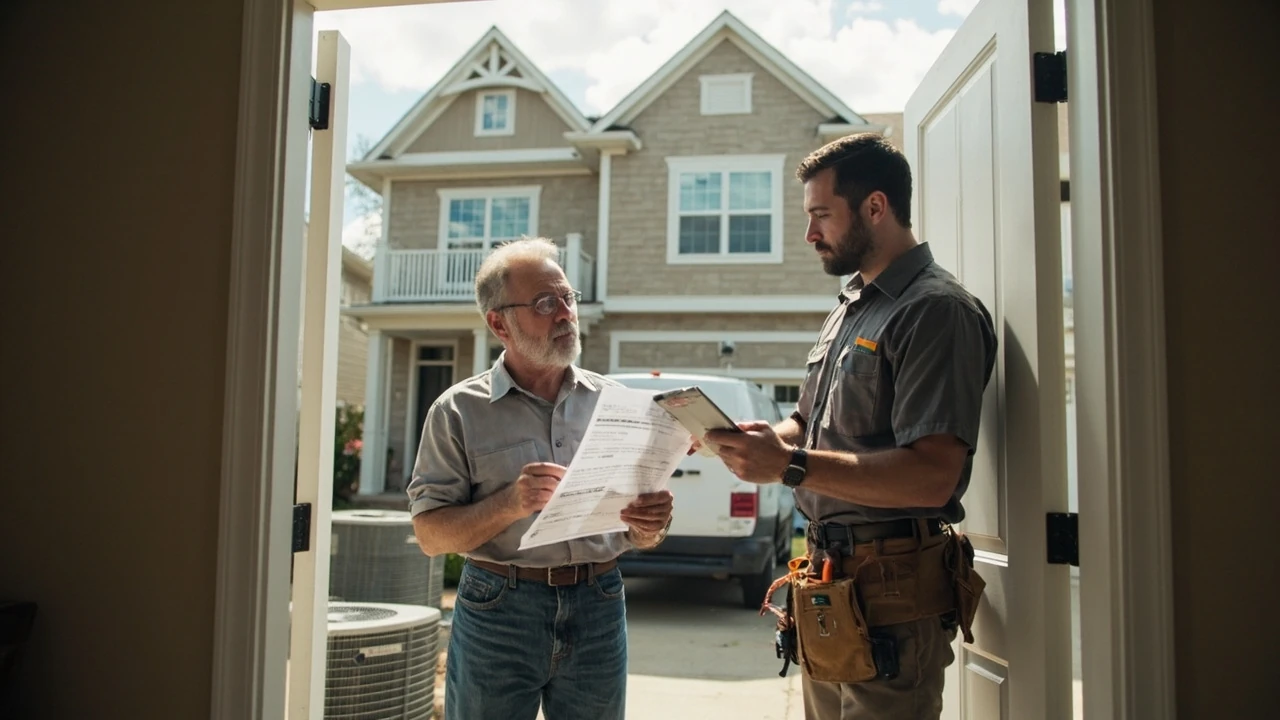
- Ask for a written scope that lists the number of supply and return runs, the dryer vent run length, and what is excluded.
- Ask for before-and-after photos, or for a camera to be inserted into the main trunk and at least one return. Some companies include this; others offer it as a small add-on.
- Ask whether the air handler blower and the evaporator coil area are part of the job, and confirm that “sanitizing” is optional, not mandatory.
Red flags worth walking away from
- A teaser price quoted over the phone without any count of vents or run length, especially if the operator does not ask how many registers you have.
- A claim that a household needs air duct cleaning every year as a default, regardless of the home’s actual dust load or filter setup.
- Pressure to add a fogger, seal-coat, or UV light on the spot, with no explanation of what each product does and no safety data sheet to review.
- No mention of the dryer vent at all, even after you ask, on a “whole-home” cleaning. A complete air duct cleaning dryer vent service should treat the dryer line as part of the system.
How the cleaning actually affects indoor air and dryer performance
The two outcomes are worth separating, because they are measured differently and the evidence base is different.
What the duct side does well
Removing accumulated dust and debris from the duct interior reduces the steady background particulate load that re-enters the living space every time the fan runs. The effect is most visible right after the cleaning, when registers blow noticeably less dust, and in homes where the previous filter was undersized or overdue. There is a separate, well-established body of work on the role of filtration and ventilation in indoor air quality, summarized in the broad overview of heating, ventilation, and air conditioning systems, which treats duct cleanliness as one input into a larger set of design and maintenance choices about air delivery, filtration, and humidity control.
What the duct side does not do
A standard cleaning will not fix a leaky duct, a stuck damper, a failed blower motor, or a contaminated coil. It will not eliminate mold if the underlying moisture problem is still present. If mold is visible inside a duct run, the right next step is a moisture investigation, not a sanitizer fog.
What the dryer vent side does well
Restoring the full cross-section of the vent line cuts drying time, lowers drum and element temperatures, and reduces the chance of a lint ignition event. In a typical family laundry cycle, a partially clogged vent can stretch drying time by 20-40 percent, which is a meaningful slice of household energy use and a real wear factor on the dryer itself.
What the dryer vent side does not do
It will not fix a crushed transition hose behind the dryer, an undersized vent hood, or a vent that runs through an unconditioned attic without insulation. A complete job will flag those issues and may recommend a small amount of corrective work; a minimal job will leave them and bill only for the brushing.
Preparing the home for the visit
A little preparation shortens the visit, reduces the chance of a mess, and lets the technician focus on the actual work.
- Make sure every supply and return register is accessible. Move furniture, rugs, or wall art that blocks them, even if the registers look clear from across the room.
- Clear a path to the air handler, the furnace, or the indoor unit. The technician will need to set the vacuum close to the unit and will run a hose to the nearest power outlet.
- Pull the dryer away from the wall if the appointment includes the dryer vent, and unplug it. The technician will disconnect the vent and may need to slide the unit forward.
- Note any rooms where you have noticed odors or visible dust and point them out. A good technician will spend more attention on flagged runs.
- Plan for the system to be off for 1-3 hours. The air handler cannot run while the vacuum is connected, and a working furnace or AC in the background fights the negative-air setup.
After the visit: what to look for and what to keep
A careful provider leaves the home in good shape and hands over a small amount of documentation. Useful follow-up items include the photos taken during the job, the total run length of the dryer vent, the date of the cleaning, and any recommendation for a return visit.
- Check the registers after the system runs for a few hours. A small amount of dust right after cleaning is normal; a steady, visible dust stream is not.
- Run a timed load of laundry and confirm the exterior vent hood flutters open under normal drying airflow.
- Note any new noises from the air handler. A cleaning should not change the sound of the blower; if it does, mention it within a day or two so the company can come back.
- Replace the filter about 30 days after the cleaning, since the work will have loosened additional material in the first few cycles. A high-MERV or deep-pleated media filter will hold more and last longer, but only if the air handler is rated for the static pressure that comes with it.
When an air duct cleaning dryer vent service is not the right next step
It is worth saying plainly: there are homes where neither side is the priority, and a different service will help more. If the system has never been sealed and ducts run through an unconditioned attic, the right first move is air sealing and insulation. If the family is reporting persistent odors after a water event, the right first move is a moisture and mold assessment, not a duct cleaning. If the dryer is taking two cycles but the exterior hood flutters strongly and the transition hose is short and metal, the problem is more likely a failing thermistor, a clogged lint screen housing inside the dryer, or a worn blower wheel inside the unit, not the vent line itself.
A good provider will be candid about this. A provider who insists on cleaning anyway, or who frames the visit as a “must do” before a sale, is the wrong provider.
Frequently asked questions
How long does a combined air duct cleaning dryer vent service take?
Most single-system homes take about 2-3 hours on site. Larger homes with two systems, long dryer vent runs, or awkward access can run closer to 4 hours. The dryer vent portion is usually the faster of the two because the run is shorter than a full duct network.
Is it safe to stay home during the cleaning?
Yes, for most adults and older children. The HEPA vacuum keeps airborne particulate low, and the work is contained to the duct system. People with severe respiratory conditions, mold sensitivity, or chemical sensitivity may prefer to be out of the home during the agitation phase, which is the noisiest and dustiest part of the visit.
Do chemicals or sanitizers need to be used?
No. A sanitizer or deodorizer is an optional add-on and is only useful if there is a specific odor or microbial concern. Most reputable providers clean with agitation and vacuum alone and will only apply a product if the homeowner agrees and the product’s safety data sheet is available.
How can I tell whether my dryer vent is actually clogged?
Run the dryer for a full timed cycle on high heat, then go outside and hold your hand near the exterior hood. You should feel a strong, steady stream of warm air and the damper should be held open by the flow. If the air is weak, warm at best, or the damper only flutters halfway, the line is at least partially obstructed and a cleaning is a reasonable next step.
What if my dryer vent exits through the roof?
Roof terminations are common in some regions and require extra setup time, a roof anchor, and a longer brush. Most providers will quote roof-vent dryer cleaning as a line item, and the cost is usually higher than a wall exit because of the access, not because the work is fundamentally different.
Will air duct cleaning lower my energy bill?
Possibly, modestly, if the previous buildup was heavy enough to noticeably restrict airflow. A clean system also lets the filter do its job without early loading, which has a small efficiency benefit. The bigger energy savings usually come from the dryer vent side, where restored airflow can cut cycle times by 20-40 percent on a previously restricted run.
Can the same provider clean both systems in one visit?
Yes, and this is the most common booking for a combined air duct cleaning dryer vent service. The setup is similar, the vacuum and agitation tools overlap, and a single trip charge is usually cheaper than two separate visits. Confirm before booking that the company actually services both, since some duct-only operators do not carry dryer vent kits.
How do I keep the system clean longer after the visit?
Use a filter that matches the air handler’s static-pressure rating, check the filter every 60-90 days, and clean the dryer lint screen after every load. For the dryer vent, a quick visual check of the exterior hood during normal yard or driveway time takes seconds and will catch a flap that has started to stick before the next full cleaning is due.
What should I do if the technician finds mold inside the ducts?
Stop and ask for a written description with photos. A small amount of surface dust on fiberglass-lined duct board is not mold, and a careful provider will explain the difference. If the photos do show growth, ask whether there is an underlying moisture source, such as a humid return, a missing vapor barrier, or a past water event, since cleaning mold without addressing moisture is a short-term fix.
Is there a difference between NADCA-certified and non-certified providers?
Certification is not a guarantee of quality, but it is a useful filter. NADCA-certified firms agree to a published standard of care, carry insurance at defined limits, and train technicians to a specific scope. A non-certified provider can still do excellent work; a certified provider simply has a third-party baseline to point to when you ask what to expect.


Leave a Reply