
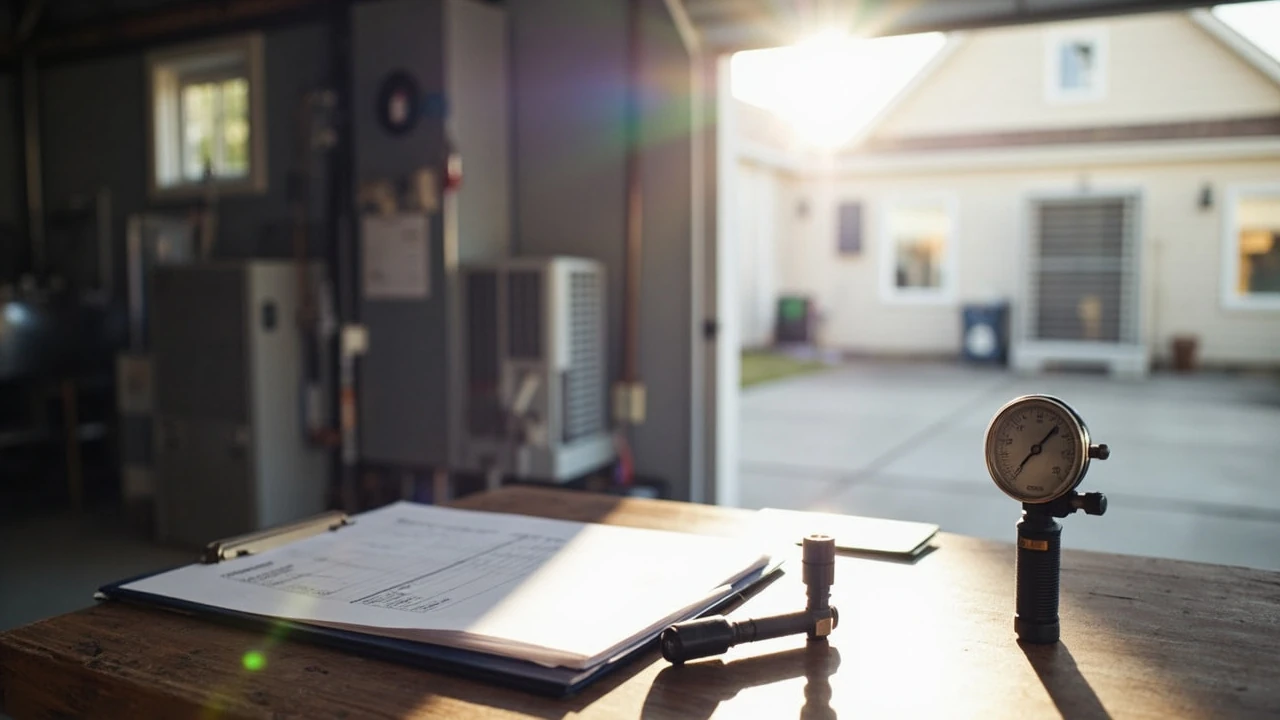
HVAC inspection cost: what homeowners actually pay
A two-bedroom ranch with a gas furnace and a central air conditioner can trigger a service quote of $180 for a basic check, while a four-zone system in a finished basement may push the same appointment past $450. The spread is not a sign of price gouging; it reflects how much hardware the technician has to look at, where that hardware sits, and how thoroughly the contractor measures performance. Getting a useful answer to the question of hvac inspection cost means breaking that total into the inspection itself, the optional add-ons, and the repairs that the inspection tends to surface.
This guide walks through realistic price ranges for the most common inspection types, the factors that move a quote up or down, what a thorough visit should include, and how to read the report a contractor hands you at the end. It also covers when an inspection is genuinely needed and when a less expensive tune-up is the better fit.
Average price ranges for the most common HVAC inspection types
Most contractors price inspections by what they have to evaluate. A standalone AC check, a standalone furnace check, and a full system inspection all carry different labor and time expectations, and the bill reflects that. The ranges below come from project cost data and reflect what homeowners typically see on a written estimate, not a promotional coupon.
| Inspection type | Typical price range | What is included | What is usually excluded |
|---|---|---|---|
| Full HVAC inspection (heating + cooling + ductwork) | $150–$500 | Safety and function check of furnace/boiler/heat pump, AC, and duct connections | Cleaning, repairs, refrigerant, replacement parts |
| AC inspection only | $70–$150 | Visual check, basic performance test, thermostat review | Coil cleaning, refrigerant top-up, capacitor replacement |
| Furnace inspection only (gas) | $70–$130 | Burner, heat exchanger, gas pressure, ignition sequence | Blower cleaning, filter replacement, repair labor |
| Air duct inspection (visual) | $80–$180 | Visual scope or camera survey of accessible duct runs | Duct cleaning, sealing, insulation work |
| Duct leakage test | $250–$400 | Pressure and airflow measurement to quantify leaks | Sealing, insulation, duct repair |
| Pre-purchase HVAC inspection (real estate) | $200–$450 | Combined heating, cooling, and duct evaluation with a written report | Any repair work, follow-up cleaning, refrigerant service |
A useful rule of thumb: if a quote covers only one piece of equipment, expect the lower end of the range. If the visit includes combustion analysis, duct leakage measurement, and a written report suitable for a real estate transaction, expect the upper end. A technician can only spend so many minutes per component before the math no longer works for either side.
What actually drives the price up or down
Two homeowners on the same street can receive wildly different quotes for what looks like the same service. The difference usually comes from a handful of variables that contractors evaluate before they write the estimate.
- Home and system size. Larger homes often have multiple indoor units, separate thermostats, or zoning controls. Each loop adds inspection time, and the technician prices the visit per zone or per unit.
- Equipment location. A furnace in a basement utility room is far easier to service than a horizontal unit tucked into a finished attic above a vaulted ceiling. Crawlspaces, tight closets, and rooftop condensers all add setup time and slow the inspection.
- Fuel type and system type. Gas furnaces and oil boilers carry combustion and venting checks that electric strip heat and air-source heat pumps do not. A heat pump adds a reversing valve, defrost controls, and a refrigerant circuit that an AC-only inspection would skip.
- Level of inspection. A basic “it heats and it cools” check costs less than a full evaluation that includes combustion analysis, temperature split measurement, static pressure readings, and a written report.
- Off-season timing. Most HVAC companies slow down in early spring and early fall. Many will offer inspection discounts in those shoulder windows to keep crews working between peak heating and cooling seasons.
- Whether the inspection feeds into other work. Some contractors credit a portion of the inspection fee toward a cleaning or repair booked on the same visit. The line item may still appear on the quote, but the net bill is lower.
If a quote looks unusually high or unusually low, the most common reason is a mismatch between the inspection level being performed and the level the homeowner actually wants. Clarify the deliverable before the visit, not after.
What a thorough HVAC inspection should include
A credible inspection is more than a glance at the thermostat and a wiped-down filter. The technician should run a defined checklist, explain what they are doing as they go, and leave behind a record of what was tested and what was not. The list below reflects the components a complete visit typically covers.
- Heating side: burner combustion, gas pressure, ignition sequence, heat exchanger visual inspection, flue and venting integrity, blower amperage, and safety controls.
- Cooling side: evaporator coil condition, condensate drain, condenser fan and coil, refrigerant pressure (if gauges are connected), contactor and capacitor visual check, and temperature split between supply and return air.
- Ductwork and airflow: visible duct condition at accessible points, return and supply grille inspection, and any quick static pressure reading the technician takes with a manometer.
- Controls and thermostat: thermostat calibration, mode switching, fan settings, and any unusual short-cycling behavior.
- Safety devices: carbon monoxide test near the furnace, smoke detector presence, and a check that high-limit switches and flame sensors are functioning.
A 1,500-square-foot single-system home usually takes 1.5 to 2 hours for a full inspection. Larger homes with multiple zones can run three to four hours. If a technician is finished in 30 minutes on a full-system visit, the inspection is almost certainly incomplete.
Tune-up vs. inspection: which one do you actually need
These two services sound similar and are often priced close together, but they answer different questions. Conflating them is one of the most common reasons a quote does not match the homeowner’s expectation.
| Service | Primary goal | Typical price range | Output |
|---|---|---|---|
| Inspection | Document current condition and flag problems | $70–$500 depending on scope | Written report, recommendations, no work performed |
| Tune-up (AC) | Restore performance and prevent breakdowns | $70–$200 | Cleaning, filter swap, minor adjustments, light report |
| Tune-up (furnace) | Restore safe combustion and heat output | $150–$500 | Blower cleaning, burners serviced, combustion adjusted, report |
If the question on the table is “is this system healthy enough to keep running,” book an inspection. If the question is “I want a known-good baseline before winter, and I am willing to pay for light maintenance at the same time,” book a tune-up. Some contractors will combine both into a single visit, and the line items on the quote will reflect that.
How to read the inspection report without being oversold
A For additional context, good inspection report has three layers: a list of what was tested, a pass/fail or measured value for each test, and a separate recommendations section. The recommendations matter most, and they are also the section that needs the most careful reading.
- Safety items. Anything in this section should be addressed quickly, regardless of cost. Cracked heat exchangers, gas leaks, failed flame sensors, and reverse-polarity electrical findings are not negotiation points.
- Recommended repairs within 12 months. These are real issues, but they are not emergencies. Get a second quote if the total is more than a few hundred dollars, or ask the technician to rank the items by impact on comfort and efficiency.
- Suggested upgrades. Whole-home purification, smart thermostats, and duct sealing may show up here. None of these are urgent, and they are the section where a homeowner can comfortably say “not right now” without putting the system at risk.
Ask the technician to walk the report in person or on a call before signing off. A contractor who can clearly explain why each item is on the list is more trustworthy than one who hands over a printed PDF and drives away.
When the inspection makes economic sense
Not every homeowner needs the same visit on the same schedule. The right frequency depends on system age, climate, and what the equipment is being asked to do.
- Annual check. Most systems benefit from a once-a-year visit. Many HVAC companies will let a homeowner split heating and cooling across spring and fall, with each side priced as a single-system inspection.
- Twice a year. Climates with very hot summers and very cold winters, or homes with older equipment, are reasonable candidates for a spring and a fall visit.
- Pre-purchase. A dedicated pre-purchase HVAC inspection before closing on a home almost always pays for itself. Replacement systems commonly run into five-figure territory, and an unknown heat exchanger crack or a seized compressor can change the deal quickly.
- Performance changes. Uneven temperatures, rising utility bills with no rate change, new allergies, or a musty smell when the system starts are all valid reasons to book an inspection outside the regular schedule.
The general guideline is one to two inspections per year, with the upper end reserved for older equipment, harsher climates, or homes where occupants have respiratory conditions that depend on clean supply air.
What an inspection commonly leads to in repair costs
An inspection is a diagnostic, not a fix. Once the report is in hand, the homeowner faces a separate decision about what to do with the findings. The table below summarizes what follow-on work typically costs, so the inspection number can be read in context rather than in isolation.
| Follow-on work | Typical price range | Notes |
|---|---|---|
| AC repair | $125–$450 total, or $75–$150 per hour | Covers capacitors, contactors, minor refrigerant top-offs, fan motors |
| Furnace repair | $150–$500 | Ignition controls, blower motors, flame sensors, pressure switches |
| General HVAC repair | $150–$450 total, or $75–$150 per hour | Diagnostic fee may be credited toward the repair |
| Duct cleaning | $450–$1,000 total, or $25–$50 per vent | Recommended only when visible mold, debris, or vermin are present |
| Ductwork replacement | $270–$500 per run, or $25–$55 per linear foot | Triggered by crushed, disconnected, or heavily leaking sections |
| AC replacement | $5,000–$8,300 | Worth weighing seriously for units over 10 years old |
| Furnace replacement | $3,500–$7,500+ | Driven by fuel type, efficiency, and duct compatibility |
| Full HVAC system replacement | $5,000–$11,000 | Typical for combined heating and cooling replacement |
A reasonable way to frame the decision: the inspection tells the homeowner whether to expect a $200 service call, a $1,000 duct project, or a five-figure system replacement in the next one to three years. That information is usually worth more than the inspection fee itself.
How real estate transactions use the inspection report
During a home sale, the HVAC inspection often shows up as a contingency item. Buyers use the report to negotiate credits or repairs, and sellers use it to demonstrate that the equipment has been maintained. A vague verbal assurance of “the system works fine” rarely holds up, while a written report with measured values gives both sides something to negotiate against.
Buyers should expect a pre-purchase inspection to cost more than a routine service call because the deliverable is a formal report rather than a maintenance ticket. Sellers who can hand over a recent inspection, recent tune-up records, and any repair invoices typically shorten the negotiation window and reduce the size of credits requested at closing.
How to choose a contractor before the inspection
Inspection quality varies widely, and the price on the quote is a poor proxy for the quality of the visit. A few checks upfront save the homeowner from paying for an incomplete report.
- Certifications. NATE-certified technicians have passed a nationally recognized competency test. EPA Section 608 certification is required for any work that involves opening the refrigerant circuit.
- Tenure and reviews. Contractors in business for more than five years with reviews on multiple platforms tend to be a safer bet than a new local listing with no history.
- Written scope. A credible quote names what will be tested, what the report will include, and what is not covered. Verbal quotes that shift after the visit are a red flag.
- Warranty terms. Any recommended work should come with a written warranty on parts and labor. If the contractor cannot produce a warranty document, ask why.
- Payment structure. Avoid paying in full before the work is done. A common pattern is a small deposit at booking, payment on completion of the inspection, and final payment only after any follow-on work is finished.
Two questions worth asking before booking: whether any routine maintenance is bundled into the inspection, and whether the contractor can supply references from the last 90 days. The answers tell the homeowner more about the visit than the price does.
Frequently asked questions
How much does an HVAC inspection cost for a typical single-family home?
Most single-system homes land between $150 and $300 for a combined heating, cooling, and ductwork inspection. Multi-zone homes and homes with difficult equipment access can run higher, with $400 to $500 appearing on quotes for thorough pre-purchase inspections.
Is an HVAC inspection the same as a tune-up?
No. An inspection documents current condition and flags problems without performing repairs. A tune-up adds cleaning, lubrication, and minor adjustments. The two are often booked together, but they appear as separate line items on the invoice.
How long does a full HVAC inspection take?
A thorough visit on a single-system home usually runs 1.5 to 2 hours. Larger homes with multiple zones, attic equipment, or combustion analysis can take three to four hours. Visits that finish in 30 minutes on a full-system scope are typically incomplete.
How often should an HVAC system be inspected?
Most systems benefit from a once-a-year inspection, with some homes justifying a spring and a fall visit. Older equipment, harsher climates, and homes with occupants who have respiratory conditions are reasonable cases for the higher frequency.
Do I need an HVAC inspection before buying a house?
Yes, in most cases. A general home inspector confirms that the system heats and cools, but does not measure combustion quality, refrigerant pressures, or duct leakage. A dedicated HVAC inspection before closing can catch a cracked heat exchanger, a failing compressor, or a duct system that needs substantial work.
Will the inspection cost be credited toward any repair work?
Many contractors credit a portion of the inspection fee toward a repair or cleaning booked on the same visit. Ask before the visit starts so the credit is on the written quote rather than negotiated after the fact.
What should be in a written HVAC inspection report?
A useful report lists what was tested, shows measured values for the key safety and performance checks, and separates safety items from recommended repairs and optional upgrades. Reports that only list “issues found” without measurements are harder to verify or challenge.
Can an inspection lower my energy bills?
The inspection itself does not change energy use, but the recommendations that come out of it often do. Sealing a leaking duct run, fixing a short-cycling thermostat, or replacing a weak capacitor can each produce measurable savings, usually within the first billing cycle after the repair.
Is it worth paying for an off-season inspection discount?
Often yes. Shoulder-season discounts of 10 to 20 percent are common in early spring and early fall, and the visit itself does not change with the season. The discount is usually worth taking unless the system has an active problem that needs an emergency visit.
What is the difference between a duct inspection and a duct leakage test?
A visual duct inspection uses a scope or camera to look at accessible duct runs and costs $80 to $180. A duct leakage test uses pressure and airflow instruments to measure how much air the system is losing and costs $250 to $400. The visual inspection tells the homeowner what the ducts look like; the leakage test tells the homeowner what they are actually costing in energy.
Practical next step before booking
Before scheduling a visit, write down the system age, the model numbers on the furnace and AC if available, and any symptoms the household has noticed over the last 12 months. A short list of two or three observations is more useful to the technician than a long story, and it usually produces a tighter quote and a more focused report. If the inspection is being booked as part of a real estate transaction, ask for the report in PDF form so it can be shared with the other party without retyping.


Leave a Reply